Brand Customer Experience

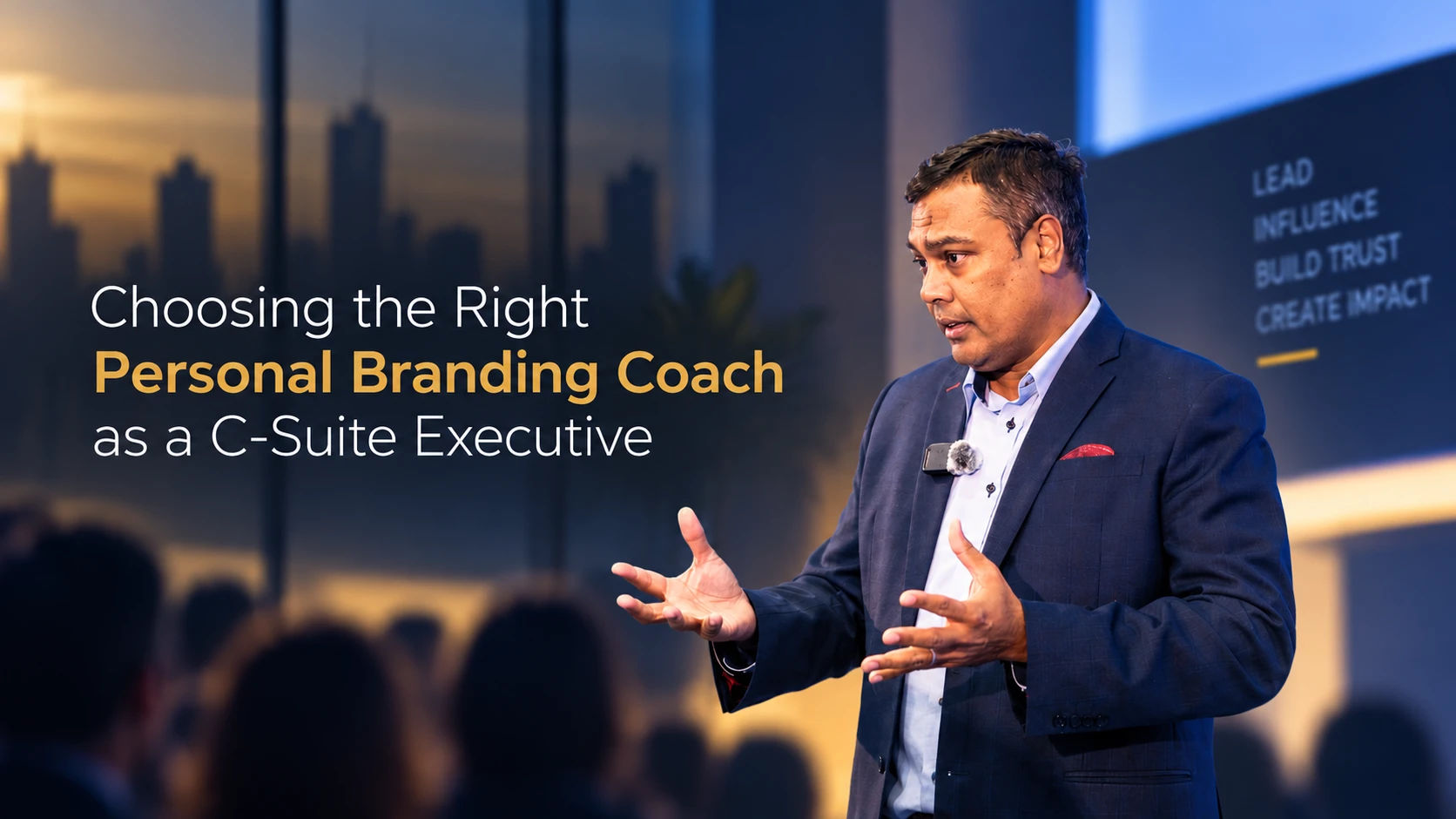
Choosing the Right Personal Branding Coach as a C-Suite Executive

Published on September 09, 2026By Team Dr. Jerome Joseph
Choosing the Right Personal Branding Coach as a C-Suite Executive

Every few months, a newly promoted CEO or a founder who just closed a large funding round starts getting outreach from personal branding coaches, sometimes three or four a week, all promising the same thing: more visibility, more LinkedIn followers, more speaking invitations. Most of these coaches have never worked with anyone above a marketing manager. Dr Jerome Joseph spent thirty years building brands for real companies before he ever coached an individual executive, and the gap he sees between a general branding coach and one who genuinely understands the C-suite is enormous. Most executives only discover that gap after they have already paid for the wrong one.

This is the conversation every leader should have before they sign a contract, not after, because by the time an executive realises the coaching was wrong for them, they have usually lost months of momentum they cannot easily get back. Choosing a personal branding coach at the executive level is not the same decision as hiring a social media consultant, and treating it that way is the single biggest reason executive coaching engagements fail to deliver anything beyond a nicer LinkedIn banner.

Why Most Executives Choose the Wrong Personal Branding Coach First

The first coach an executive finds is usually the one with the loudest content strategy, not the strongest track record. That is not an accident. Coaches who specialise in high volume content and templated frameworks are easy to find because they market constantly. Coaches who have actually sat across the table from a CEO before an earnings call or a board presentation rarely need to run ads, their work comes through referrals instead.

Dr Jerome Joseph explains this distinction to every leader before they even get into what personal branding coaching actually involves and why leaders need it in the first place. A junior brand coach hands a client a content calendar. An executive brand coach asks what business outcome the client is trying to create, because at the C-suite level, a personal brand is not a vanity project, it is a business asset that affects deal flow, hiring, investor confidence, and how a leader's own team follows them.

What "Personal Branding Coach" Actually Means at the C-Suite Level

At the C-suite, personal branding coaching is not about becoming an influencer. It is about closing the gap between how capable an executive actually is and how clearly the market, investors, and employees understand that capability. Dr Jerome Joseph has worked with more than 300 executives and CEOs, and the pattern is always the same. The strongest operators in the room are frequently the least visible, and that invisibility quietly costs them board seats, partnerships, and top talent who never hear their story.

A real executive branding coach works across five dimensions: how a leader is positioned in the market, how clearly they communicate that position, how consistently they show up across the channels that matter to their specific industry, how their reputation is defended when something goes wrong, and how all of this compounds into influence over time. Anyone offering to fix a personal brand with a posting schedule alone is solving a fraction of the actual problem.
37

Dr Jerome Joseph often points to two CEOs in the same industry, both equally skilled operators, as a case in point. One treated her personal brand as a side project handed to a junior marketing hire. The other worked deliberately with a coach who understood boardroom dynamics and investor psychology, not just content calendars. Within eighteen months, the second CEO was the one being quoted in industry press, invited onto advisory boards, and approached first when a competitor needed a turnaround leader. The skill gap between them was small. The visibility gap, built entirely through coaching decisions, was enormous.

Most personal branding coaches have never worked with a C-suite executive. Make sure yours has.

Five Questions to Ask Before Hiring a Personal Branding Coach

Every executive considering coaching, whether with Dr Jerome Joseph or anyone else, should ask these five questions before signing anything.

Question to Ask

Why It Matters

Have you personally coached other C-suite executives or founders, and can I speak to one of them?

Confirms real experience at your level, not just theory or entry level clients.

What is your process for connecting my personal brand to a specific business outcome, not just visibility?

Separates coaches focused on business results from those focused only on content output.

How do you handle confidentiality, given that executive positioning often touches unannounced strategy or hiring?

Executive work involves sensitive information a generalist coach may not be equipped to protect.

What does your engagement actually include week to week, beyond content writing?

Reveals whether the coaching is a real structured process or just a content service.

What would be different about my visibility or inbound opportunities in ninety days, and how will we know?

Sets a measurable expectation instead of a vague promise.

If a coach cannot answer the third and fifth questions with specifics, they have likely never worked at this level before. Confidentiality and measurable business outcomes are the two things generalist coaches almost never address, because their model was built for entrepreneurs building an audience from zero, not executives protecting and extending a reputation they have already spent years building.

Red Flags That Signal a Coach Is Not Built for Executive Work

A few patterns show up consistently among coaches who are not equipped for this level of work. They lead every conversation with follower counts instead of business impact. They offer the same package to a first time founder and a public company CEO. They cannot describe how they would handle a reputational issue, only how they would grow an audience. And they measure success in likes and impressions rather than in inbound board invitations, speaking requests, investor interest, or the quality of talent applying to work with a leader.

Dr Jerome Joseph built his own coaching approach differently because he came from the operating side first, not from a marketing or social media background. He was CEO of a publicly listed brand agency before he ever coached an individual executive, and that experience shaped what he looks for entirely. A brand built without business context is decoration. A brand built with business context becomes a genuine competitive advantage, the kind that shows up in the deals a leader gets invited into and the people who choose to work for them.

What Results Should Executives Expect, and By When

Executives considering coaching almost always ask about timelines, and that is a fair question, since time is the scarcest resource a senior leader has.

Timeframe

What Typically Changes

Weeks 4 to 6

Sharper positioning and a clearer personal narrative start to take shape.

Around 90 days

Inbound speaking or board interest increases, engagement shifts toward the right audience rather than a bigger one, and internal teams speak differently about the leader's vision.

Beyond 6 months

Visibility compounds into recurring opportunities such as press mentions, advisory invitations, and stronger investor or partner interest.

Anyone promising overnight virality is selling the wrong outcome. Executive branding compounds, it does not go viral, and that is exactly why it holds up over years instead of fading after one good post.

It is worth being equally clear about what a good coach will not promise. No credible executive branding process guarantees a board seat, a specific number of speaking invitations, or a fixed revenue figure, because those outcomes depend on factors outside anyone's direct control. What a credible process does guarantee is that decision makers who search a leader's name, sit across from them in a boardroom, or consider them for an opportunity will find a clear, consistent, and accurate picture of their capability. That clarity is what converts opportunity into results, and it is the one thing most executives say they wish they had built years earlier.

See exactly where your personal brand is falling short before you invest in coaching.

How the Coaching Process Is Structured for the C-Suite

Every executive who works with Dr Jerome Joseph goes through the same disciplined process, because consistency is what makes the results measurable rather than accidental. The process starts with a full audit of where a leader's current brand stands against where their business actually needs it to be, the same starting point used in the ten-point personal brand audit for executives. From there, positioning is built around the executive's specific industry and role rather than a generic template, and the messaging, content, and public presence that follows carries that positioning consistently across every place stakeholders encounter the leader.

2-5-scaled-1 (1)

This is the exact structure behind the personal branding coaching program built specifically for executives, leaders, and entrepreneurs, where Dr Jerome Joseph works with a limited number of leaders at a time so the coaching stays personal rather than templated. It is also why the program is built around a free diagnostic first. Before anyone commits, they should be able to see exactly where their current brand is falling short, which is the entire purpose of the Ultimate Personal Brand Checklist created for leaders evaluating this decision.

The Real ROI of Getting This Decision Right

Dr Jerome Joseph has seen executives spend six figures on the wrong coach and come away with a nicer LinkedIn banner and nothing else. He has also seen leaders invest a fraction of that with the right process and land board seats, keynote invitations, and investor introductions that were never available to them before, because for the first time, the market could actually see what they had built quietly for years. The same discipline that helped some of the strongest CEOs build a personal brand that outlasts any single platform is available to any executive willing to treat this as seriously as they treat any other business investment.

Choosing the right coach is not about finding the loudest name in a feed. It is about finding someone who has actually stood where the executive is standing, and who can prove it with outcomes, not just content. Get that decision right, and a personal brand stops being a side project and starts being one of the most valuable assets on a leader's balance sheet.

The one question every executive should ask before signing with any coach is simple: are they equipped to protect a reputation built over a career, or only equipped to grow an audience from nothing? Those are two different skill sets, and at the C-suite level, only one of them is worth paying for.

Frequently Asked Questions

What does a personal branding coach for C-suite executives actually do?
A qualified executive branding coach connects positioning, communication, and visibility directly to business outcomes such as board opportunities, investor confidence, and talent attraction, rather than simply managing a content calendar or social media posting schedule.

How is executive personal branding coaching different from a general branding course?
Coaching is personalised to a specific industry, role, and business goals with ongoing guidance, while a course delivers the same generic material to everyone regardless of seniority or context. At the C-suite level, generic material rarely accounts for confidentiality needs or board level positioning.

What questions should someone ask before hiring a personal branding coach?
At minimum, ask about their experience coaching other C-suite executives, how they handle confidentiality, what a typical engagement includes beyond content writing, and what measurable outcome to expect within ninety days.

How long does it take to see results from executive personal branding coaching?
Initial shifts in positioning and messaging typically appear within four to six weeks, while measurable external results such as inbound opportunities and stronger stakeholder engagement usually develop within ninety days of consistent work.

What are the warning signs that a personal branding coach is not suited for executive-level work?
Warning signs include a focus on follower counts over business outcomes, identical packages offered to first-time founders and senior executives, and an inability to explain how they would protect a reputation rather than just grow visibility.

How does Dr Jerome Joseph's personal branding coaching work for executives?
Dr Jerome Joseph coaches a limited number of executives, leaders, and entrepreneurs at a time using a five dimension framework that connects positioning, messaging, and visibility to measurable business outcomes, starting with a personal brand audit before any coaching engagement begins.