The CEO Personal Brand Ecosystem
A useful way to think about executive personal branding is as an ecosystem:
Brand Channel | What It Builds |
|---|
LinkedIn | Visibility and conversation |
Speaking | Authority and human connection |
Articles | Expertise and search visibility |
Podcasts | Depth and personality |
Media | Credibility and third-party validation |
Books | Intellectual authority |
Events | Relationships and influence |
Company Website | Business alignment and trust |
The objective is not to use every channel. The objective is to make sure the CEO's reputation does not depend on only one.
Why Consistency Matters More Than Frequency
One of the biggest mistakes CEOs make is treating personal branding like a content calendar. They post frequently for three weeks, disappear for two months and then return when they have something to promote. That does not create a strong reputation. Consistency does not mean publishing every day.
.webp "Consistency Matters More Than Frequency (1)")
It means repeatedly reinforcing the same underlying expertise, values and point of view. If a CEO wants to be recognised for leadership transformation, the majority of their public thinking should strengthen that association. Over time, repetition creates recognition.
Recognition creates familiarity. Familiarity, when supported by genuine expertise, can create trust.
Personal Brand and Executive Presence Are Connected
A CEO's personal brand is not only what appears online. It is also what people experience offline. How does the CEO communicate during a difficult meeting? How does the leader respond to criticism?
Does the executive give credit to the team? Can they explain complex ideas simply? Do their actions match the values they communicate publicly? These experiences shape reputation. This is why personal branding cannot be separated completely from leadership behaviour. The digital profile may create the first impression, but leadership behaviour determines whether that impression survives.
Avoid Building a Personal Brand That Is Bigger Than the Person
There is another important principle. A CEO should not create a personal brand based on an identity they cannot consistently sustain. If the online personality says one thing while employees experience something completely different, the gap eventually becomes visible. A credible personal brand should reflect reality.
It should amplify genuine expertise rather than manufacture an artificial persona. That is particularly important for CEOs because their reputation affects more than their own career. It can influence the reputation of the organisation they represent.
What Should a CEO Be Known For?
A practical exercise is to complete this sentence:
"When people hear my name, I want them to think of..."
The answer should not be "successful CEO". That is a title, not a positioning strategy.
A stronger answer might be:
The CEO who understands AI transformation
The leader who builds high-trust cultures
The expert in customer experience
The business leader who understands future-ready sales
The executive who helps companies navigate change
Once that association is clear, content, speaking, interviews and other visibility opportunities can reinforce it.
The 90-Day CEO Personal Brand Test
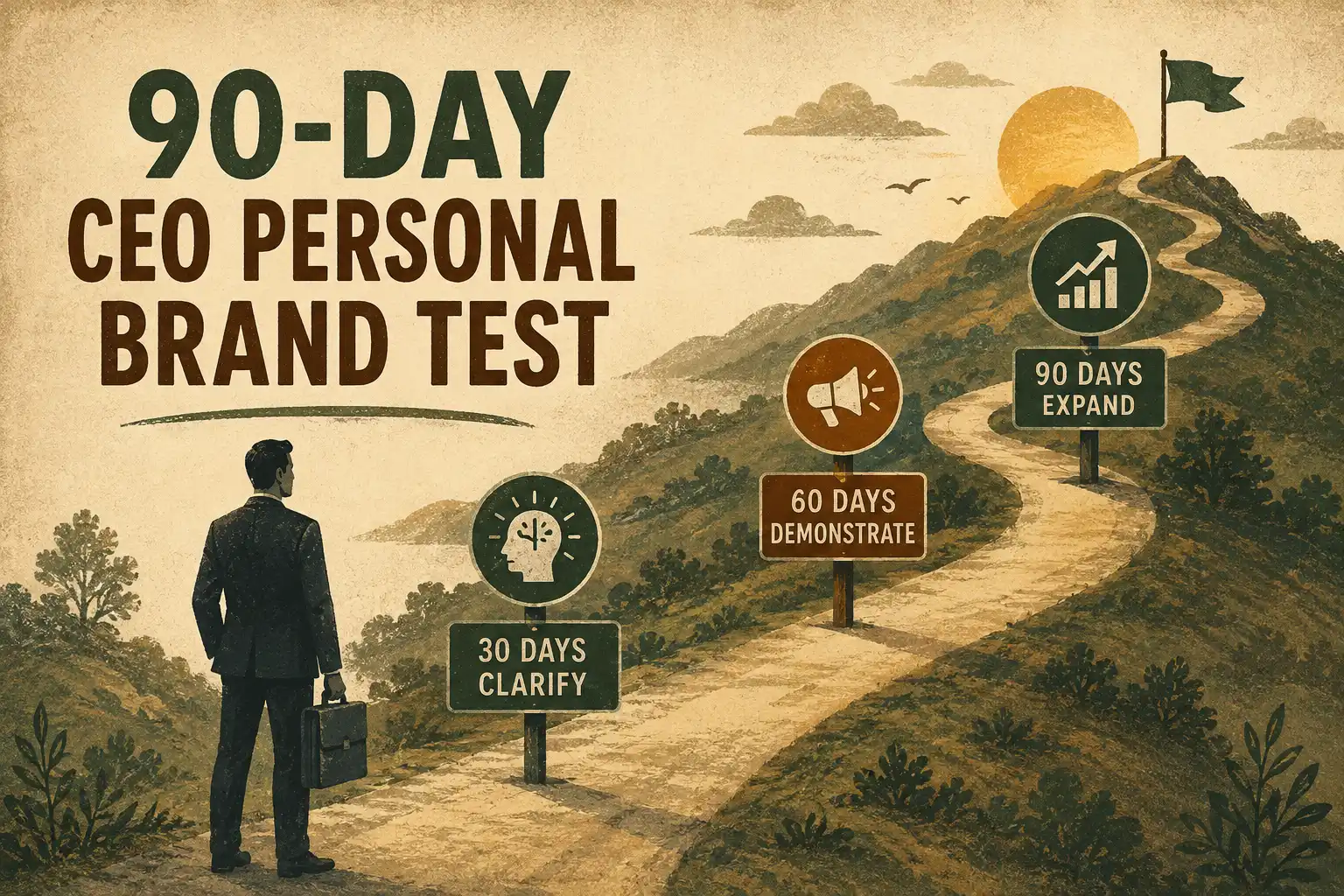
CEOs do not need to completely redesign their personal brand overnight. A simple 90-day approach can reveal what is working.
Month 1: Clarify
Define the expertise, audience, point of view and reputation the CEO wants to build.
Month 2: Demonstrate
Create useful content, participate in relevant conversations and share real business insights.
Month 3: Expand
Add external platforms such as podcasts, speaking opportunities, industry publications, events or strategic collaborations.
At the end of 90 days, review what has changed. Are people associating the CEO with the intended expertise? Are relevant stakeholders engaging? Are invitations increasing? Is the CEO appearing in more meaningful conversations? The answers provide more useful information than follower count alone.
The Bigger Opportunity for CEOs
The business environment is becoming more transparent. Customers can research leaders. Employees can evaluate executives. Investors can examine leadership teams. Conference organisers can investigate speakers before inviting them. That makes executive reputation increasingly important. A CEO's personal brand is therefore not a vanity project.
It is part of the company's wider trust architecture. The goal is not to become an influencer. The goal is to become a credible authority whose ideas, behaviour and expertise create confidence.
Dr. Jerome Joseph's work sits at this intersection of personal branding, leadership, business strategy and influence. His approach focuses on helping executives develop a clear leadership identity, communicate their value and build long-term credibility rather than chasing short-term visibility.
A strong CEO personal brand ultimately answers three questions:
What does this leader know?
What does this leader stand for?
Why should people trust this leader?
When those three answers are clear and consistently demonstrated, the personal brand can work far beyond LinkedIn.
It can work in boardrooms, conferences, customer conversations, media interviews, recruitment, partnerships and the wider marketplace.
The strongest CEO personal brand is not the one people see most often. It is the one people remember for the right reasons.
Frequently Asked Questions
1. Why should CEOs build a personal brand beyond LinkedIn?
LinkedIn is useful for visibility, but a CEO's reputation should not depend on one platform. Speaking, media, articles, podcasts, books and industry participation can create a broader and more credible authority ecosystem.
2. What should a CEO be known for?
A CEO should ideally be associated with a clear area of expertise, perspective or leadership value. The strongest positioning connects genuine expertise with a problem that matters to the audience.
3. Can a CEO's personal brand help the company?
Yes. A credible CEO can strengthen trust among customers, employees, partners, investors and other stakeholders. When the CEO's reputation aligns with the company's positioning, personal and corporate brands can reinforce each other.
4. How can CEOs build thought leadership?
CEOs can share original perspectives, business lessons, frameworks, industry analysis and practical insights through articles, speaking, podcasts, media contributions and professional platforms.
5. Does personal branding mean becoming an influencer?
No. Executive personal branding is about building credibility, clarity and authority around genuine expertise. The goal is not maximum attention, but meaningful recognition among relevant audiences.
6. How long does it take to build a strong CEO personal brand?
There is no universal timeline. A strong personal brand develops through consistent positioning, valuable ideas, visible expertise and credible leadership behaviour over time. A focused 90-day strategy can provide an initial foundation and useful signals.