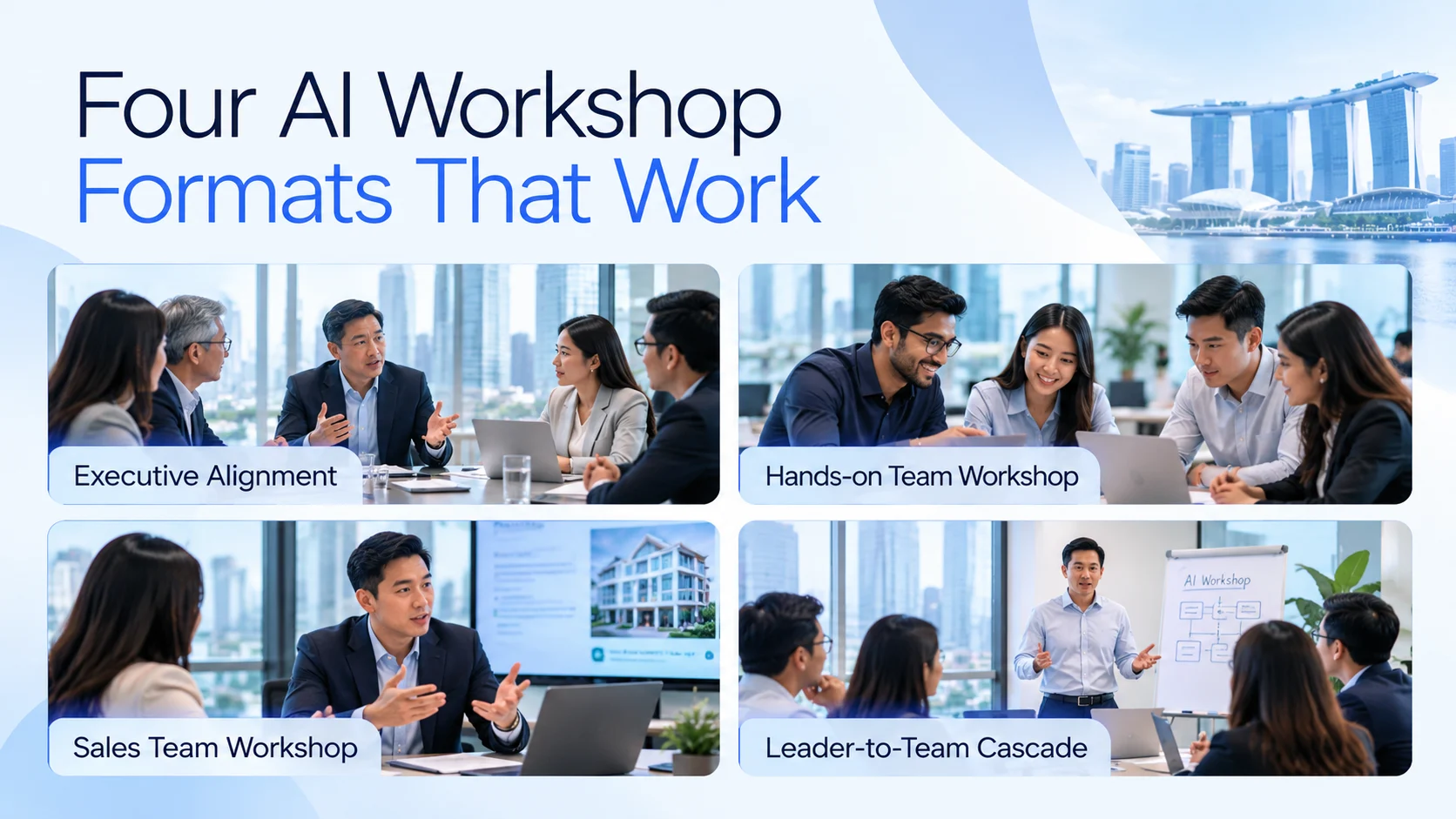
Most companies now agree that their people need to learn AI. The harder question is how. Many start with a one-hour talk, a tool demo or a playlist of videos, and then wonder why nothing changes on Monday morning. A well-run AI workshop is built to close that gap. People leave with work they have already done, not just ideas they have heard.
This guide explains what a corporate AI workshop is, which formats work, what a sensible agenda looks like and how to choose a provider. It also shows where a workshop fits next to a longer corporate AI training programme, so you do not end up buying the wrong thing.
What is a corporate AI workshop?
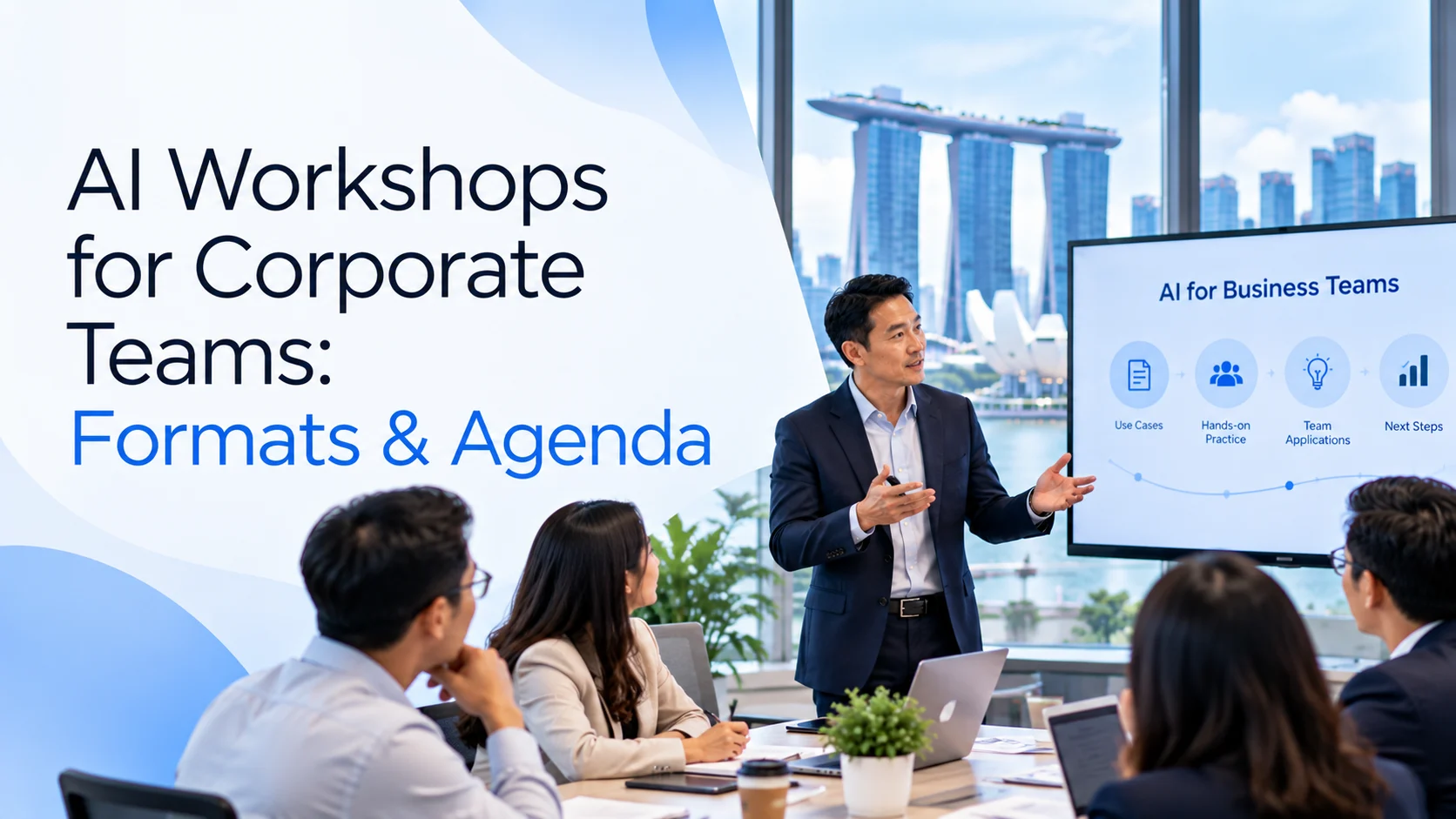
A corporate AI workshop is a working session where a team uses AI tools on its own real tasks, guided by an experienced trainer. The key word is working. Participants do not sit and watch. They write, test, compare and decide.
That makes it different from two things it is often confused with:
A keynote is built to shift how a whole room thinks. It is short, high energy and wide in reach, but it does not teach anyone a new daily habit.
A full training programme is built to change skills over weeks or months, with practice between sessions.
A workshop sits in the middle. It is long enough to practise and short enough to fit into a busy calendar. Many organisations use it as the first step before a wider corporate training plan, or as a reset when earlier AI efforts did not stick.
Who should be in the room?
Mixing levels and roles is the quickest way to waste a workshop. A senior leader needs to decide where AI is allowed and where it is not. A sales rep needs help with account research and follow-up. A marketer needs a workflow for drafts and edits. Teaching all three the same thing leaves all three bored.
A better rule is one role group, one workshop:
Leaders and managers: where AI helps, where it does not, who owns the decisions and how to set clear team standards.
Sales teams: research, outreach, call preparation and follow-up. This is why many companies pair a workshop with AI sales training for their revenue teams.
Marketing and content teams: drafting, editing, repurposing and keeping a consistent brand voice.
Operations and support teams: summaries, reports, internal documents and routine replies.
When each group works on its own tasks, the learning is relevant from the first ten minutes. That is what makes people try the tools again the next day.
Group size matters too. A session works best when the trainer can look at what each person is doing and give a direct comment. When a room is too big, people hide, copy their neighbour or stop trying. If you have a large team, run the same workshop in two or three rounds rather than one crowded day.