Why 90% of AI Training Fails Within 90 Days (And What High-Performing Companies Do Differently)

Why 90% of AI Training Fails Within 90 Days (And What High-Performing Companies Do Differently)

Why AI Training Is Becoming a Business Priority

Artificial Intelligence is no longer just an emerging technology it has become a business necessity. Organisations are using AI to automate repetitive work, improve decision-making, enhance customer experiences, and increase productivity across every department.

To keep pace with this shift, businesses are investing in AI training programmes that help employees understand and apply AI effectively in their daily work.

Yet many organisations experience the same challenge. Employees attend an AI workshop, experiment with new tools for a short time, and gradually return to their previous ways of working.

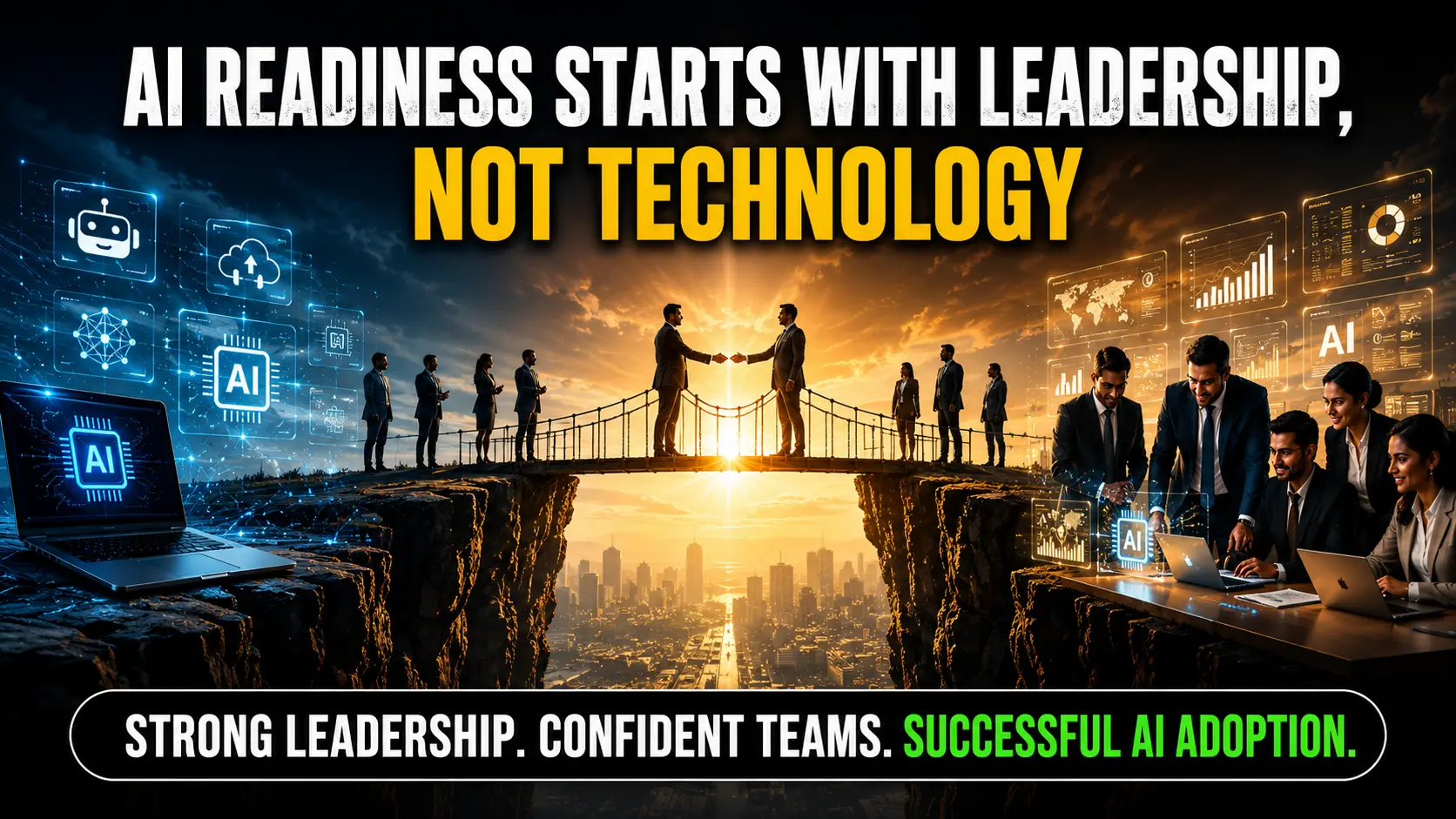
The issue isn't that AI doesn't deliver value. The issue is that successful AI adoption requires more than a single training session. Without leadership support, continuous learning, practical application, and clear business objectives, even the best AI training programme can lose momentum within the first 90 days.

The Cost of Getting AI Training Wrong

When AI adoption slows, organisations lose far more than the cost of training. They miss opportunities to improve efficiency, encourage innovation, and maximise the value of their technology investments.

Common outcomes include:

  • Employees stop using AI after the initial excitement fades.

  • Teams continue relying on outdated manual processes.

  • AI software remains underutilised.

  • Leaders struggle to demonstrate measurable ROI.

  • Different departments adopt AI at different speeds, creating capability gaps.

Over time, these challenges reduce productivity and make it harder for organisations to stay competitive.

High-Performing Organisations Take a Different Approach

Successful organisations don't measure AI success by the number of employees who complete training. Instead, they focus on whether employees consistently use AI to improve business outcomes.

Rather than treating AI training as a one-off event, they build an ongoing learning culture that includes leadership involvement, role-specific learning, continuous reinforcement, and practical workplace application.

This shift from knowledge transfer to behaviour change is what separates organisations that simply learn about AI from those that successfully transform with it.

The 7 Reasons AI Training Fails Within 90 Days

7 Reason (converted)


Most AI training programmes don't fail because employees can't learn AI. They fail because organisations focus on teaching tools instead of building long-term habits. Here are the seven most common reasons AI adoption loses momentum—and how successful organisations avoid them.

1. AI Training Is Treated as a One-Time Event

Many organisations believe a single workshop is enough to create lasting change. While employees often leave training feeling motivated, that enthusiasm quickly fades without ongoing practice and support.

High-performing organisations treat AI learning as a continuous journey with regular coaching, reinforcement, and real workplace application.

2. Employees Learn AI But Rarely Use It

Knowledge alone doesn't change behaviour. If employees aren't encouraged to apply AI in their daily tasks, they naturally return to familiar ways of working.

The most successful organisations integrate AI into everyday activities such as writing emails, analysing reports, preparing presentations, and solving business problems.

3. Leaders Don't Lead by Example

Employees take their cues from leadership. If managers and executives don't actively use AI, teams often assume it isn't a business priority.

When leaders demonstrate AI in meetings, decision-making, and daily workflows, adoption increases across the organisation.

4. Training Focuses on Tools Instead of Business Challenges

Teaching employees how AI tools work isn't enough. What matters is showing them how AI solves real business problems.

For example:

  • Sales teams can create stronger proposals faster.

  • Marketing teams can plan and optimise campaigns more efficiently.

  • HR teams can streamline recruitment and onboarding.

  • Customer service teams can improve response quality.

  • Leaders can make faster, data-driven decisions.

Employees adopt AI faster when learning is directly connected to their roles.

5. Every Employee Receives the Same Training

Different departments have different goals, responsibilities, and workflows. A generic AI programme often feels irrelevant to many employees.

High-performing organisations provide role-specific AI training so every team learns how AI supports their unique business objectives.

6. Success Is Measured by Attendance Instead of Results

Completing an AI workshop doesn't guarantee business impact.

Instead of asking how many employees attended training, organisations should measure:

  • Are employees using AI regularly?

  • Has productivity improved?

  • Are repetitive tasks completed faster?

  • Are teams making better decisions?

  • Is customer experience improving?

These outcomes provide a far clearer picture of AI success.

7. There Is No Long-Term AI Strategy

AI continues to evolve rapidly. Organisations that stop learning after one training session quickly fall behind.

Successful companies create a culture of continuous learning through ongoing education, leadership support, regular practice, and continuous improvement.

AI transformation isn't a one-time project it's an ongoing business capability.

Quick AI Training Health Check

Quick AI Training Health Check

Use this simple checklist to evaluate your organisation's AI readiness. Do employees actively use AI every week? Have leaders adopted AI in their own work? Does each department receive role-specific AI training? Are business outcomes measured instead of attendance? Is there a long-term AI adoption roadmap? If you answered "Yes" to most of these questions, your organisation is building a strong foundation for successful AI adoption. If not, it's time to rethink your approach before valuable time and investment are lost.
A Simple 90-Day AI Adoption Roadmap

A Simple 90-Day AI Adoption Roadmap

Sustainable AI adoption doesn't happen overnight. High-performing organisations follow a structured roadmap that helps employees build confidence, develop practical skills, and create lasting habits. Days 1–30: Build awareness and encourage employees to explore AI with confidence. Days 31–60: Apply AI to real workplace tasks and integrate it into daily workflows. Days 61–90: Reinforce new habits, measure business outcomes, and expand AI adoption across teams. This phased approach helps organisations achieve steady progress instead of short-term enthusiasm.

The AI Adoption Framework: Turning Training Into Business Results

AI training delivers the best results when organisations focus on long-term adoption rather than one-off learning. High-performing companies build AI into everyday work by combining leadership support, practical learning, and continuous improvement.

The journey usually follows four simple stages—creating awareness, building practical skills, encouraging daily usage, and measuring business impact. This structured approach helps employees gain confidence and makes AI a natural part of their workflow.

The Four Stages of AI Adoption

Stage

Primary Focus

Awareness

Help employees understand AI opportunities and responsible use.

Practical Skills

Teach teams how AI improves their daily tasks.

Daily Adoption

Reinforce learning through regular workplace application.

Business Impact

Measure productivity, efficiency, and business outcomes.

Organisations that follow these stages see stronger adoption because employees learn AI in a way that directly supports their work instead of treating it as another training programme.

A Simple 90-Day Roadmap

AI transformation doesn't happen overnight. Sustainable adoption is built through consistent progress.

Timeline

Goal

Days 1–30

Build awareness and encourage experimentation.

Days 31–60

Apply AI to real business tasks.

Days 61–90

Reinforce habits and measure business results.

Rather than expecting immediate change, successful organisations help employees make small improvements that become lasting workplace habits.

Conclusion

AI training is only the starting point. Lasting transformation happens when organisations combine continuous learning, leadership commitment, and practical application.

Businesses that build a strong AI learning culture don't just improve productivity—they create teams that adapt faster, innovate more confidently, and remain competitive as AI continues to evolve.

Related Posts
CARA AI - Talk to Dr Jerome Joseph AI Assistant
CARA AI