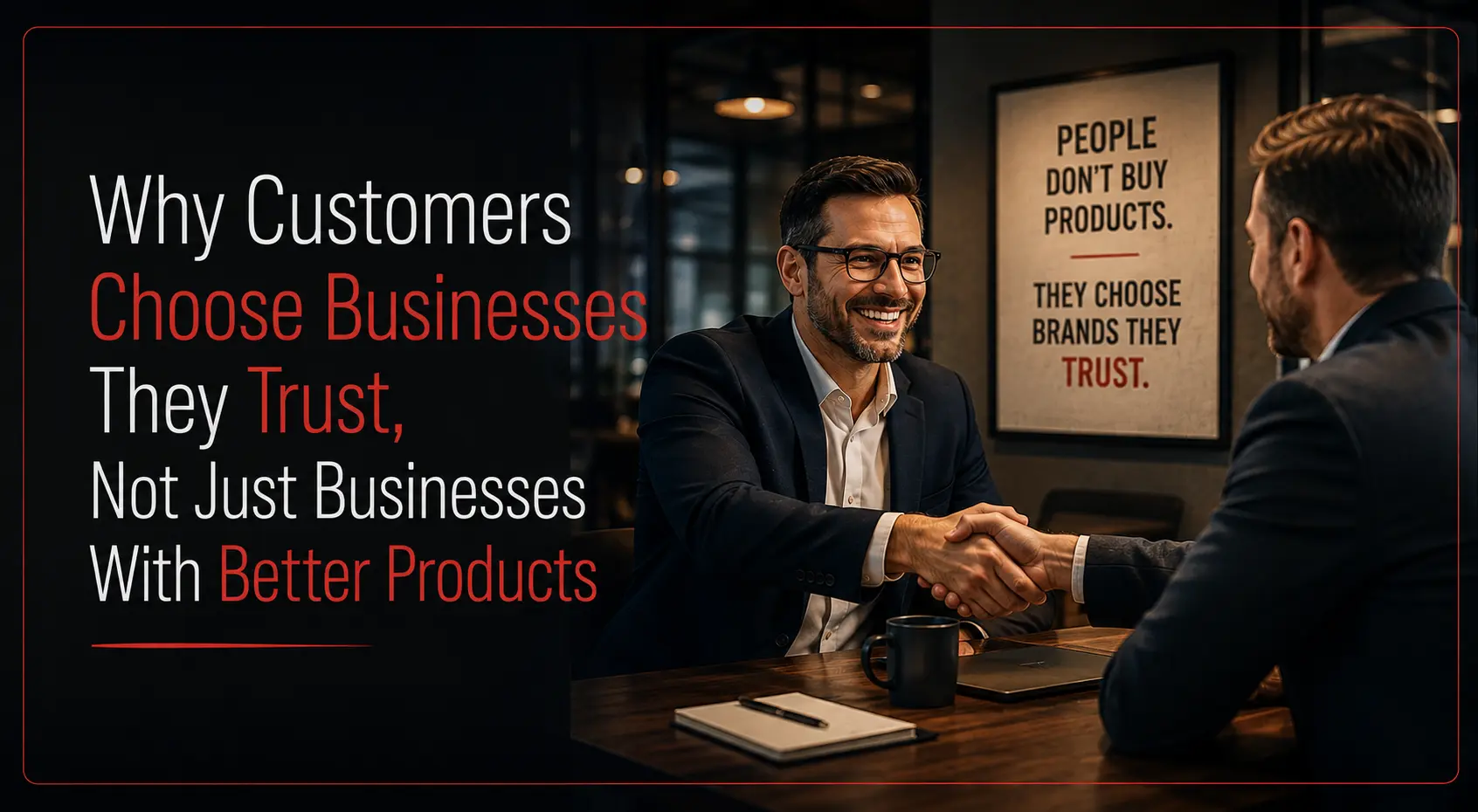
Learning how to build trust in sales is the difference between a deal that closes and a deal that stalls. Buyers are rarely choosing only between products. They are choosing between levels of confidence.
A business can have an excellent product, competitive pricing and a strong marketing campaign, yet still lose customers to a competitor. That reality can be difficult for business leaders to understand. If one company has better features, better technology or even a better price, why would a customer choose another business? Because customers are rarely choosing only between products.
They are choosing between levels of confidence.
Before making an important purchase, customers want to know whether a business will deliver what it promises, communicate honestly, respond when something goes wrong and continue to create value after the transaction. The bigger the financial, operational or reputational risk, the more important that confidence becomes.
A better product can win attention. A trusted business can win the decision.
Why a Better Product Does Not Always Win
Businesses often assume that customers make decisions rationally. The assumption is understandable. If Product A has better features than Product B, it seems logical that Product A should win.
Real buying decisions are rarely that simple.
Customers also think about risk. Will the supplier deliver on time? Will the service team respond quickly? Will the salesperson disappear after the contract is signed? Will the company understand the customer's business? Will the promised experience actually match reality?
A product comparison can show which option appears better on paper. Trust influences which option feels safer to choose. This becomes especially important in B2B markets, where customers are often choosing a long-term business relationship rather than simply purchasing a product. A poor decision can affect operations, revenue, employees and even the customer's own reputation.
That is why a trusted business can sometimes outperform a technically superior competitor.
Trust Begins Before the Customer Buys
Trust does not begin when a customer signs a contract.
It starts much earlier. A potential customer may discover a business through Google, social media, a recommendation, an event, a sales conversation or a professional referral. From that first interaction, the customer begins collecting signals about whether the company deserves confidence.
Does the company understand the problem? Does its communication feel credible? Are its claims realistic?
Does its team demonstrate genuine expertise? Does the business appear consistent across different touchpoints? These small signals gradually create an overall impression.
This is why branding is not simply about visual identity. The customer experience itself becomes part of the brand. A company can communicate one promise through advertising, but customers ultimately judge the brand through what actually happens when they interact with it.
The Trust Gap Between Promise and Experience
One of the biggest threats to customer trust is inconsistency.
A company may promise fast service but take days to respond. It may describe itself as transparent while hiding important information during the sales process. It may claim to be customer-focused while making customers repeat the same problem to multiple departments.
The customer notices these gaps. Marketing creates an expectation. Experience either confirms that expectation or destroys it. A simple way to understand the relationship is:
Brand promise + consistent experience = stronger trust
Brand promise + inconsistent experience = growing doubt
This is why customer trust cannot belong only to the marketing department. Sales, leadership, customer service, operations and employees all contribute to the experience that customers eventually associate with the brand.
.jpg "images (18)")