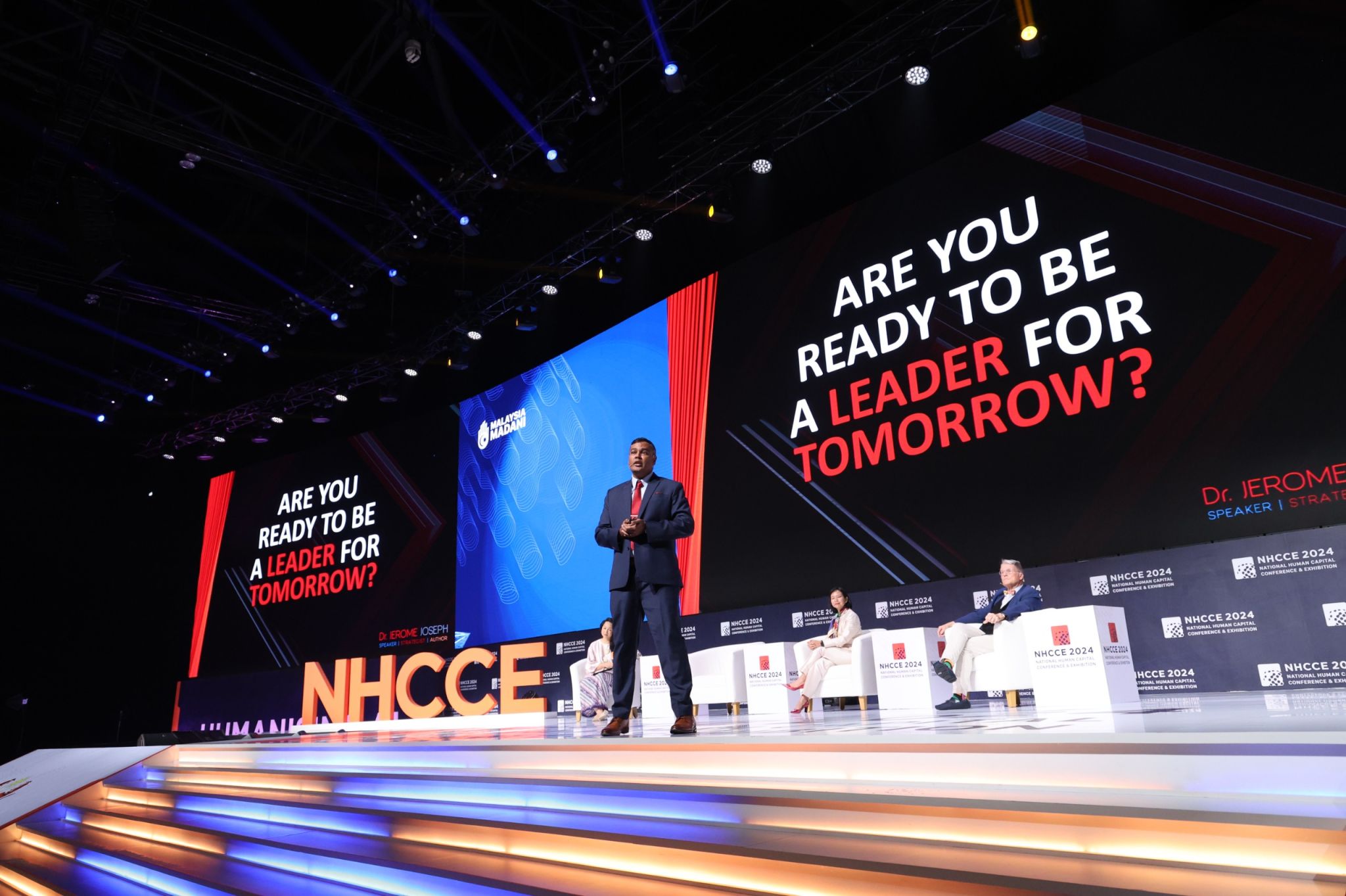
Dr Jerome Joseph has spent more than 30 years on stages across 40+ countries, and he has also sat on the other side of the table as the person signing off on speaker budgets. Through this experience, he has seen a common problem happen far too often in Singapore: an organisation books a speaker because someone on the committee saw a viral clip, the session gets polite applause, and six weeks later nobody in the room can name a single idea from it.
To book a keynote speaker in Singapore for a corporate event or conference, see the dedicated speaking page.
That is not a speaker problem. That is a selection problem.
Singapore sits at the centre of this because it has quietly become the region's default venue for anything serious. Marina Bay Sands, Suntec, the Singapore EXPO and Raffles City host leadership offsites, sales kickoffs and industry conferences almost every week of the year, and most of those events serve audiences from across Hong Kong, Kuala Lumpur, Jakarta, Sydney and the Gulf at the same time. That means the speaker an organisation picks is not addressing one market. They are addressing five.
What actually separates a keynote from a talk
Before looking at any names, event organisers need to be clear about what they are buying. A keynote is not a workshop, and it is not a guest slot. A keynote sets the frame for the entire event, and every session after it is measured against it. For organisers unsure which format their agenda needs, this breakdown on the difference between a keynote speaker and a guest speaker provides a useful starting point.
The best keynote does not give an audience information. It gives them a decision they were avoiding.
The five criteria that predict whether a keynote lands
Based on years of experience in the speaking industry, these five criteria separate speakers who move a room from speakers who merely entertain one.

Original frameworks, not recycled inspiration. Ask what proprietary model the speaker will use. If the answer is a list of anecdotes, keep looking. Dr Jerome Joseph has documented his own frameworks across 12 best-selling books, allowing clients to understand the thinking behind his work before they book him.
Real operating experience. A speaker who has run a business, carried a P&L or led a transformation will handle the Q&A differently from someone who has only studied the topic.
Regional fluency. A keynote written for a Chicago audience will not land the same way in a room split between Singaporean, Indonesian and Emirati leaders. Event organisers should ask specifically for case studies delivered in Asia.
Willingness to customise. Event organisers should ask what the speaker needs before the event. If a speaker does not ask for pre-event interviews with the organisation's leaders, there is a greater chance the audience will receive a stock talk. Dr Jerome Joseph covers this in more depth in his guide on how to choose the right keynote speaker.
Credentialed professional standing. Designations like Certified Speaking Professional, Global Speaking Fellow and Hall of Fame induction are peer-assessed rather than self-awarded, which makes them a useful filter.
What a keynote speaker costs in Singapore
Almost nobody publishes this, which is why budgets get set badly. Here are the ranges commonly quoted across Singapore speaker bureaus in 2026.
Speaker tier | Typical fee range (SGD) | Best fit |
|---|---|---|
Local subject specialist | 8,000 to 20,000 | Internal town halls, functional team sessions |
Established professional keynote speaker | 10,000 to 35,000 | Annual conferences, leadership summits |
Global headliner with international travel | 15,000 to 40,000 and above | Flagship customer events, regional kickoffs |
Half-day masterclass or workshop add-on | Typically 40 to 70 percent on top of keynote fee | When you need behaviour change, not just energy |
Fees move based on session length, depth of customisation, travel and whether the organisation wants content licensing or recording rights afterwards. Event teams should ask about all four up front. The cheapest quote is rarely the cheapest outcome.

.jpg)


-(1).webp "Personal Branding: Build a Brand People Remember")