



































































AI Training for Corporates, Employees, Executives, Leaders, and Professionals

AI Training for Corporates, Employees, Executives, Leaders, and Professionals

Summary

AI training for corporations focuses on building awareness, skills, mindset, and ethical understanding so employees, executives, leaders, and professionals can use artificial intelligence responsibly and effectively. Instead of technical overload, modern AI training emphasizes clarity, real world application, leadership alignment, and business impact. Organizations that invest in structured AI training gain stronger decision making, higher productivity, reduced risk, and future ready leadership.

How Organizations Can Build Real AI Capability Without Fear or Confusion

Artificial intelligence is no longer something we talk about for the future. It is already shaping how decisions are made, how teams work, and how leaders think. Across industries, organizations are feeling the pressure to adapt. Some feel excited. Many feel overwhelmed. Most feel unsure where to start.

This is where structured, human centric AI training becomes critical.

AI training for corporates is not about turning everyone into a data scientist. It is about helping people understand what AI really is, how it affects their roles, and how they can use it responsibly, confidently, and strategically.

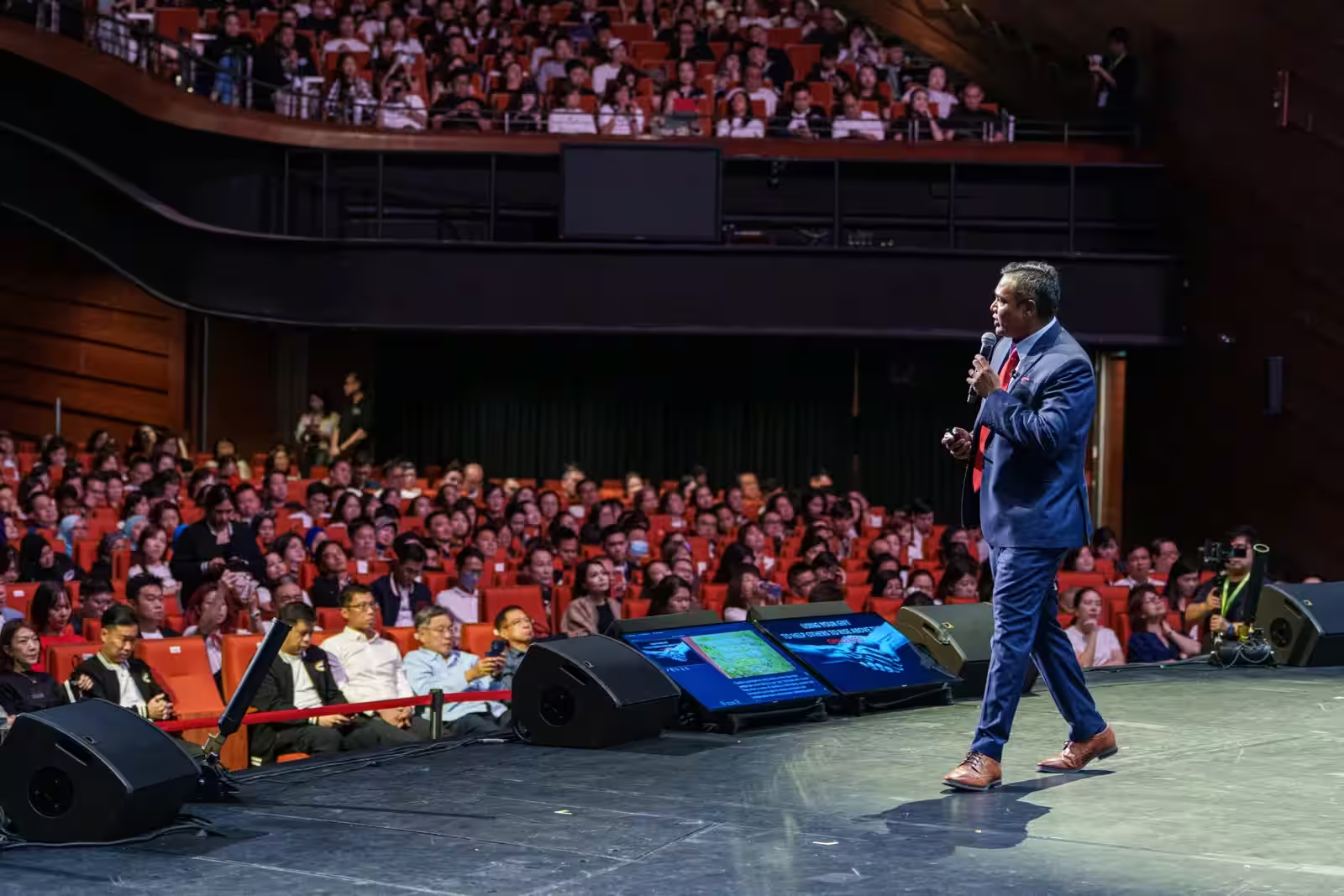
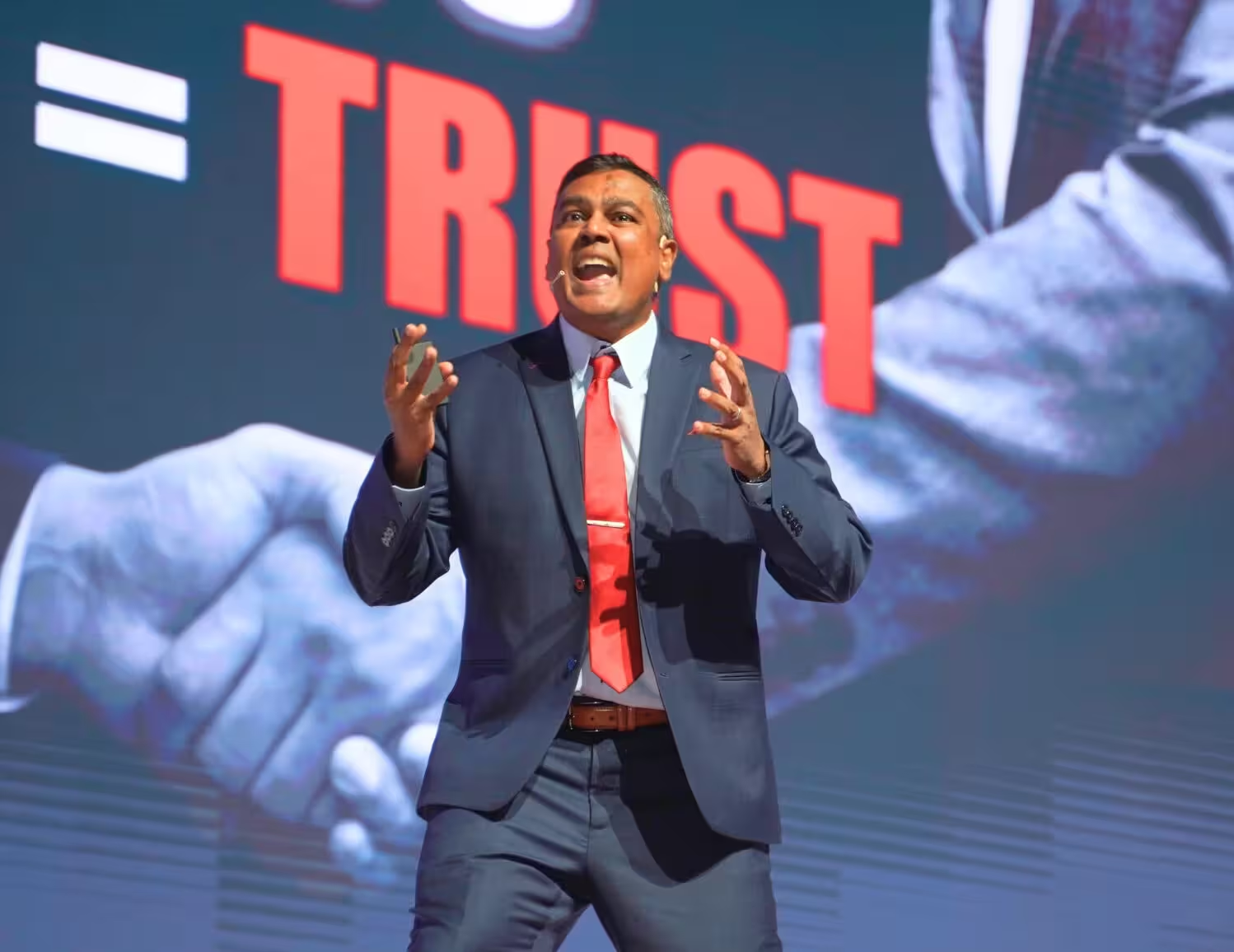
At the center of this conversation globally is Dr Jerome Joseph, a trusted authority in AI training, leadership development, and future ready capability building. His work bridges the gap between technology, leadership, and human potential, helping organizations move forward without fear or hype.

This guide breaks down everything leaders, HR teams, and decision makers need to know about AI training for employees, executives, leaders, and professionals.

Why AI Training Is No Longer Optional for Corporates

Every organization today is already affected by AI, whether they realize it or not. From automated reports to customer support tools to hiring platforms, AI is embedded in daily operations.

The problem is not AI itself. The problem is untrained humans using powerful tools without understanding their limits or risks.

Without AI training for corporates, organizations face
• Poor decision making driven by blind trust in tools
• Fear and resistance among employees
• Ethical and compliance risks
• Leadership confusion about where AI fits strategically

AI training creates confidence. It replaces fear with understanding and guesswork with clarity.

What Makes AI Training Truly Effective

Many AI programs fail because they are either too technical or too theoretical. Effective AI training balances three critical elements.

First, relevance. People need to see how AI connects directly to their role.

Second, simplicity. AI must be explained in a way that feels accessible, not intimidating.

Third, responsibility. Ethical use, bias awareness, and human judgment must stay at the center.

This philosophy is deeply embedded in the AI training approach delivered by Dr Jerome Joseph, as outlined in his brand framework and global positioning.

AI Training for Employees

Building Confidence at the Ground Level

Employees are often the most affected by AI and the least supported.

AI training for employees focuses on
• Understanding what AI can and cannot do
• Learning how AI tools support productivity
• Reducing fear of job loss
• Encouraging collaboration with AI rather than competition

When employees understand AI, they stop resisting it. They start using it intelligently and responsibly.

AI Training for Executives

From Awareness to Strategic Decision Making

Executives do not need to code. They need clarity.

AI training for executives helps leaders
• Understand AI implications at a strategic level
• Make informed investment decisions
• Avoid over reliance on vendors and hype
• Align AI initiatives with business goals

Executives trained in AI lead with confidence instead of confusion.

AI Training for Leaders

Leading Humans in an AI Powered World

Leadership changes when AI enters the picture. Leaders must manage not just performance, but trust, fear, and ethics.

AI training for leaders focuses on
• Leading hybrid human AI teams
• Maintaining empathy and emotional intelligence
• Making ethical decisions under algorithmic influence
• Communicating change clearly

This is where leadership development and AI training intersect most powerfully.

AI Training for Professionals

Staying Relevant Without Burning Out

Professionals across industries worry about relevance. AI training for professionals helps individuals
• Upgrade skills without overwhelm
• Understand AI as a career accelerator
• Use AI for better productivity and creativity
• Stay competitive without losing their human edge

Professionals who understand AI become valuable, not replaceable.

How AI Training Supports Business Outcomes

AI training is not an expense. It is a performance multiplier.

Organizations that invest in AI training for corporates experience
• Higher productivity
• Faster decision making
• Better cross functional collaboration
• Reduced compliance and ethical risks
• Stronger employer branding

Organizations With AI Training vs Without AI Training

Area

With AI Training

Without AI Training

Employee Confidence

High

Low

Leadership Clarity

Strong

Confused

AI Adoption

Strategic

Reactive

Risk Management

Proactive

Vulnerable

Productivity Gains

Sustainable

Inconsistent


Why Dr Jerome Joseph Stands Out in AI Training

Many trainers talk about AI. Few understand how it connects to leadership, branding, and human behavior.

Dr Jerome Joseph brings
• Global experience across regions and cultures
• Deep leadership development expertise
• Clear, human language instead of technical jargon
• Practical frameworks instead of abstract theory

His positioning as a global authority in AI leadership and corporate capability building is consistently reinforced across his brand ecosystem

Why AI Training Is Accelerating Globally

Insight

Impact

Employees with AI training are more productive

Up to 40 percent improvement

Leaders trained in AI make faster decisions

Reduced delays by 30 percent

Organizations with AI literacy programs

Lower ethical risk incidents


AI training for employees

Ethical AI Training

The Missing Piece in Most Programs

AI without ethics is dangerous.

Responsible AI training covers
• Bias awareness
• Data privacy basics
• Human oversight
• Accountability in decision making

This ensures AI serves people, not replaces judgment.

How to Structure AI Training Inside Organizations

Successful AI training programs follow a layered approach.

Phase one focuses on awareness.
Phase two focuses on application.
Phase three focuses on leadership and ethics.

This staged model ensures adoption without resistance.

Future of AI Training for Corporates

AI will evolve. Tools will change. Skills will shift.

But one thing remains constant. Organizations that invest in people will always outperform those that invest only in technology.

AI training is not about machines. It is about humans learning how to think, decide, and lead better.

Frequently Asked Questions

What is AI training for corporates

AI training for corporates helps organizations build awareness, skills, and ethical understanding so employees and leaders can use AI effectively and responsibly.

Who should attend AI training programs

Employees, professionals, leaders, executives, and senior decision makers all benefit from AI training tailored to their roles.

Is AI training technical

No. Effective AI training focuses on understanding, application, and decision making rather than coding.

How long does AI training take

Programs can range from short awareness sessions to ongoing leadership development journeys.

Does AI training reduce job loss fears

Yes. When employees understand AI, fear reduces and confidence increases.

Why is AI training important for leaders

Leaders must guide people through change, manage ethics, and make informed strategic decisions.

How does AI training support business growth

It improves productivity, decision quality, innovation, and risk management.

Is AI training relevant for non tech industries

Absolutely. AI impacts every industry including finance, healthcare, education, and services.

What makes Dr Jerome Joseph’s AI training different

His approach combines AI understanding with leadership, branding, and human behavior expertise.

How can organizations start AI training

Start with awareness programs, followed by role based learning and leadership focused sessions.

Related Posts
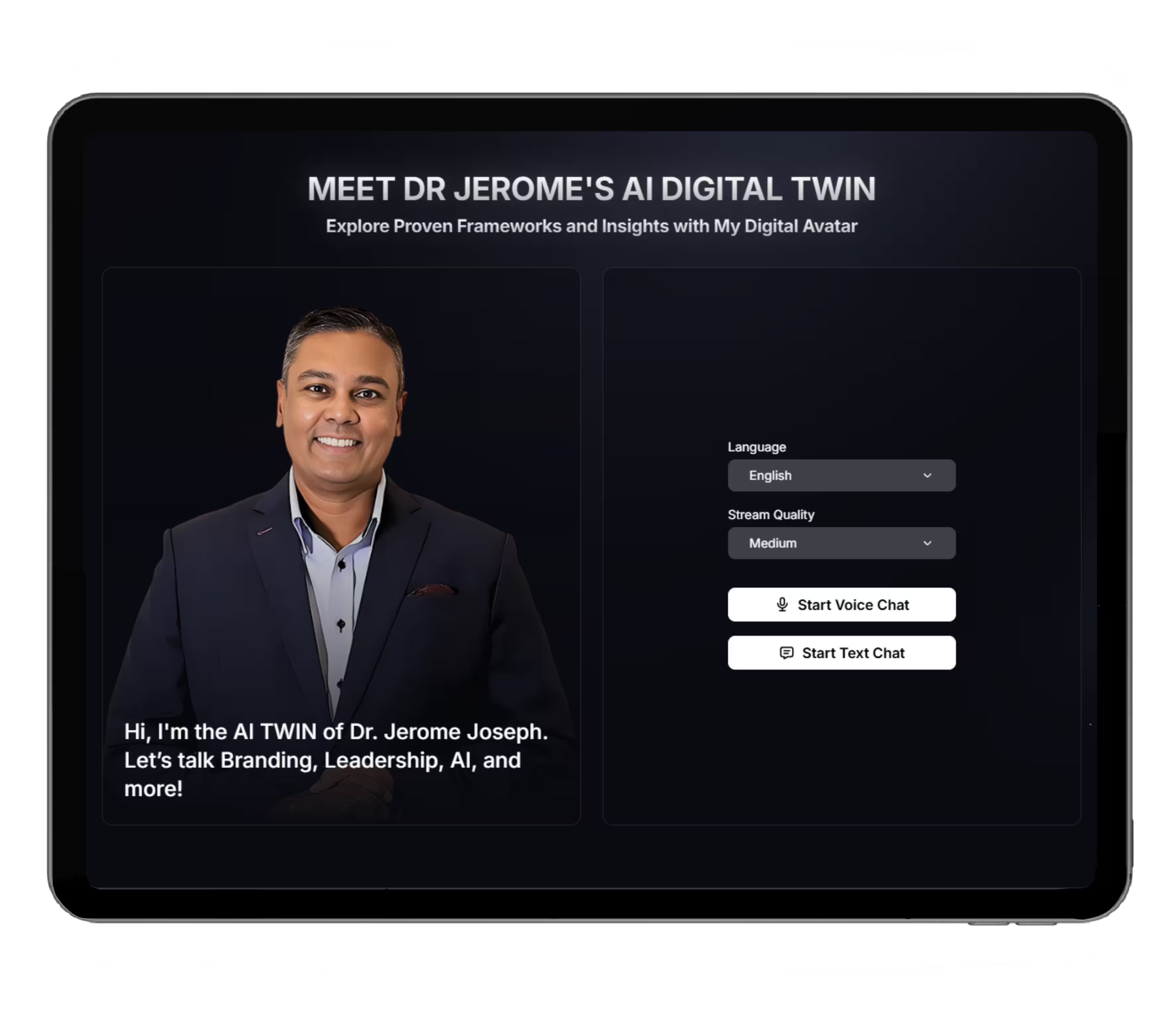
CARA AI - Talk to Dr Jerome Joseph AI Assistant
CARA AI