During a recent workshop on Brand Mastery in the Age of AI, someone asked a question that almost everyone is thinking but few ask directly:
How long does it really take to build a strong personal or corporate brand?
Most people expect a fast answer.
A campaign.
A launch.
A viral moment.
But the honest answer is far less exciting and far more important.
Reputation is built the same way trust is built.
Slowly.
Consistently.
Through repeated brand behaviours.
The Myth of the Overnight Brand
We live in a world obsessed with speed.
Social media rewards visibility. Algorithms reward attention. Marketing headlines promise rapid growth. It is easy to believe that a strong brand can be built through one powerful campaign or one breakthrough moment.
Yes, attention can be gained quickly.
But credibility cannot.
One presentation does not build lifelong authority.
One good decision does not create long term trust.
And one great moment does not define a brand.
Attention is instant.
Reputation is cumulative.
What Actually Builds a Strong Brand?
A strong brand is not built in moments of applause. It is built in moments of discipline.
It is built by what you do again and again, especially when it would be easier not to.
That consistency shows up in small daily choices:
Keeping your promises
Delivering quality even when no one is watching
Choosing long term trust over short term gain
Standing by your values when it is inconvenient
Showing up prepared every single time
Over time, those repeated behaviours form perception.
And perception forms a brand.
Brand Behaviours Define Reputation
Brand is not what you say once.
Brand is what you repeatedly demonstrate.
In a corporate context, this might look like:
Consistent customer experience
Transparent communication
Ethical decision making
Leadership alignment with stated values
In a personal branding context, it might look like:
Sharing thoughtful insights consistently
Acting with integrity in professional relationships
Investing in continuous learning
Being reliable and responsive
These behaviours compound.
At first, they may seem small.
But over time, they become identities.
Why Consistency Matters More in the Age of AI
Today, we operate in the age of AI. Content is easier to produce. Messaging can be automated. Visibility can be amplified.
But AI can scale communication. It cannot manufacture credibility.
In fact, the more automated the world becomes, the more people value authenticity and consistency.
If your brand message says one thing and your actions demonstrate another, the gap becomes visible faster than ever.
AI accelerates exposure.
But it also accelerates transparency.
This makes disciplined brand behaviour even more critical.
Brands Are Built in Quiet Moments
There is something important we often forget.
Brands are not formed in moments of attention.
They are formed in moments of discipline.
They are formed when:
You choose quality over shortcuts
You prepare thoroughly for a small meeting
You respond thoughtfully to criticism
You admit mistakes openly
You treat people with respect consistently
These are not glamorous moments.
They are quiet, often invisible moments.
But they are powerful.
Over time, people do not remember what you said once.
They remember what you stood for repeatedly.
The Timeline No One Wants to Hear
So how long does it take?
Longer than a campaign.
Longer than a quarter.
Longer than a trend cycle.
Building a strong personal or corporate brand is a long term commitment.
It requires:
Strategic clarity
Behavioral consistency
Patience
Resilience
There is no shortcut to trust.
The good news is that the process is within your control. You do not need a massive budget to build a strong brand. You need discipline.
A Practical Approach to Intentional Brand Building
Strong brands are not accidental. They are intentional.
If you want to build credibility, authority, and relevance, consider focusing on three areas:
1. Clarity of Positioning
Know what you stand for.
Define your expertise clearly.
Be intentional about the value you bring.
Without clarity, consistency becomes difficult.
2. Consistency of Action
Align your words and behaviours.
Deliver value repeatedly.
Show up regularly in meaningful ways.
Consistency builds recognition.
Recognition builds trust.
3. Commitment to Long Term Thinking
Avoid chasing every new trend.
Focus on sustainable growth.
Build relationships, not just visibility.
Long term thinking protects your reputation.
The Role of Structure in Brand Building
While brand building is long term, it does not have to be random.
Structured action accelerates clarity and focus.
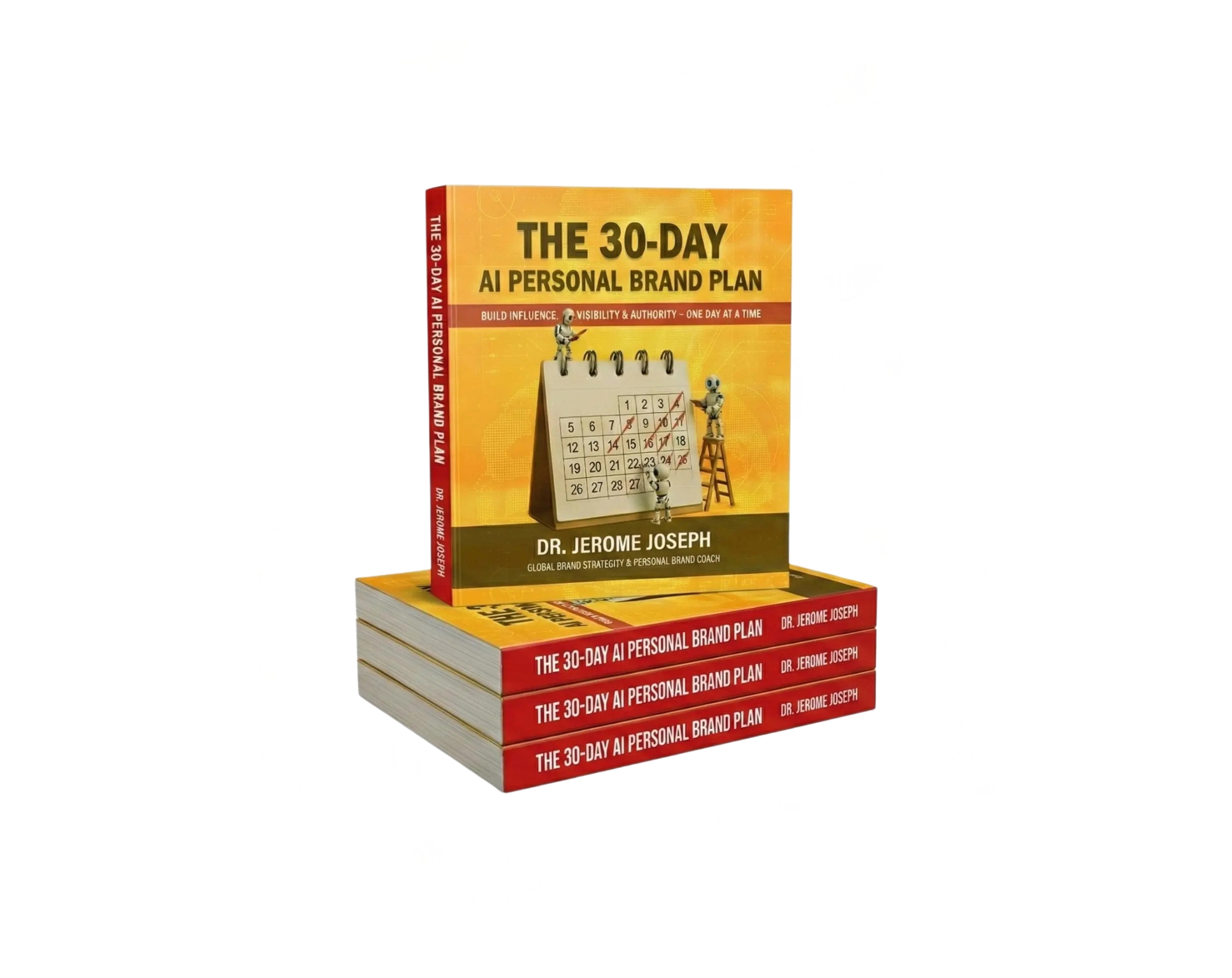
In my new book, The 30-Day AI Personal Brand Plan, I share practical ideas and structured strategies to help professionals build credibility and authority in an intentional way.
The goal is not to create noise.
The goal is to build relevance.
Especially in the age of AI, professionals need clarity about how to position themselves, how to use technology wisely, and how to maintain authenticity while scaling visibility.
Structure supports consistency.
Consistency builds brand.
Final Reflection
The question from the workshop was simple.
How long does it take to build a strong brand?
The answer is not glamorous.
It takes as long as it takes to build trust.
And trust is built slowly, through repeated behaviours, aligned values, and disciplined action.
You do not build a brand in a moment of attention.
You build it in repeated moments of integrity.
Over time, people do not remember the single presentation you gave.
They remember the standard you consistently upheld.
That is what defines a strong personal or corporate brand.
Summary
Building a strong personal or corporate brand is not about one campaign or one breakthrough moment. It is about consistent brand behaviours repeated over time. Reputation grows slowly through discipline, integrity, and alignment between words and actions. In the age of AI, where visibility is easy but credibility is rare, consistency and authenticity matter more than ever. Strong brands are not built in moments of attention. They are built in moments of disciplined action repeated over time.