
Global Keynote Speaker on AI, Branding, Sales and Culture Transformation
Inspiring, Engaging, and Transformative Insights to Shape Your Brand's Future
A keynote should do more than inspire—it should ignite action.




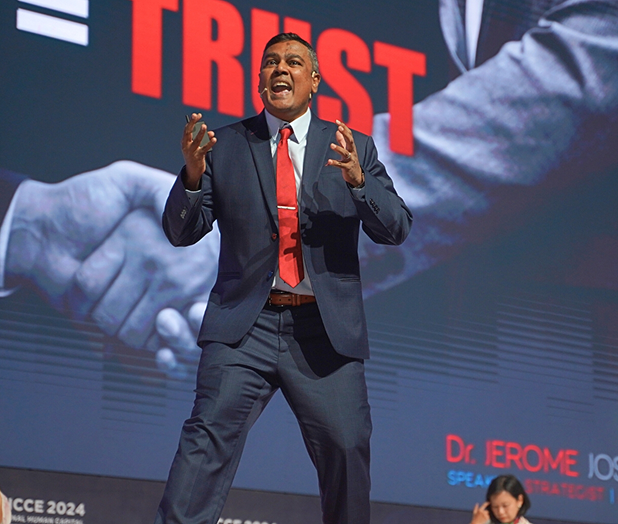




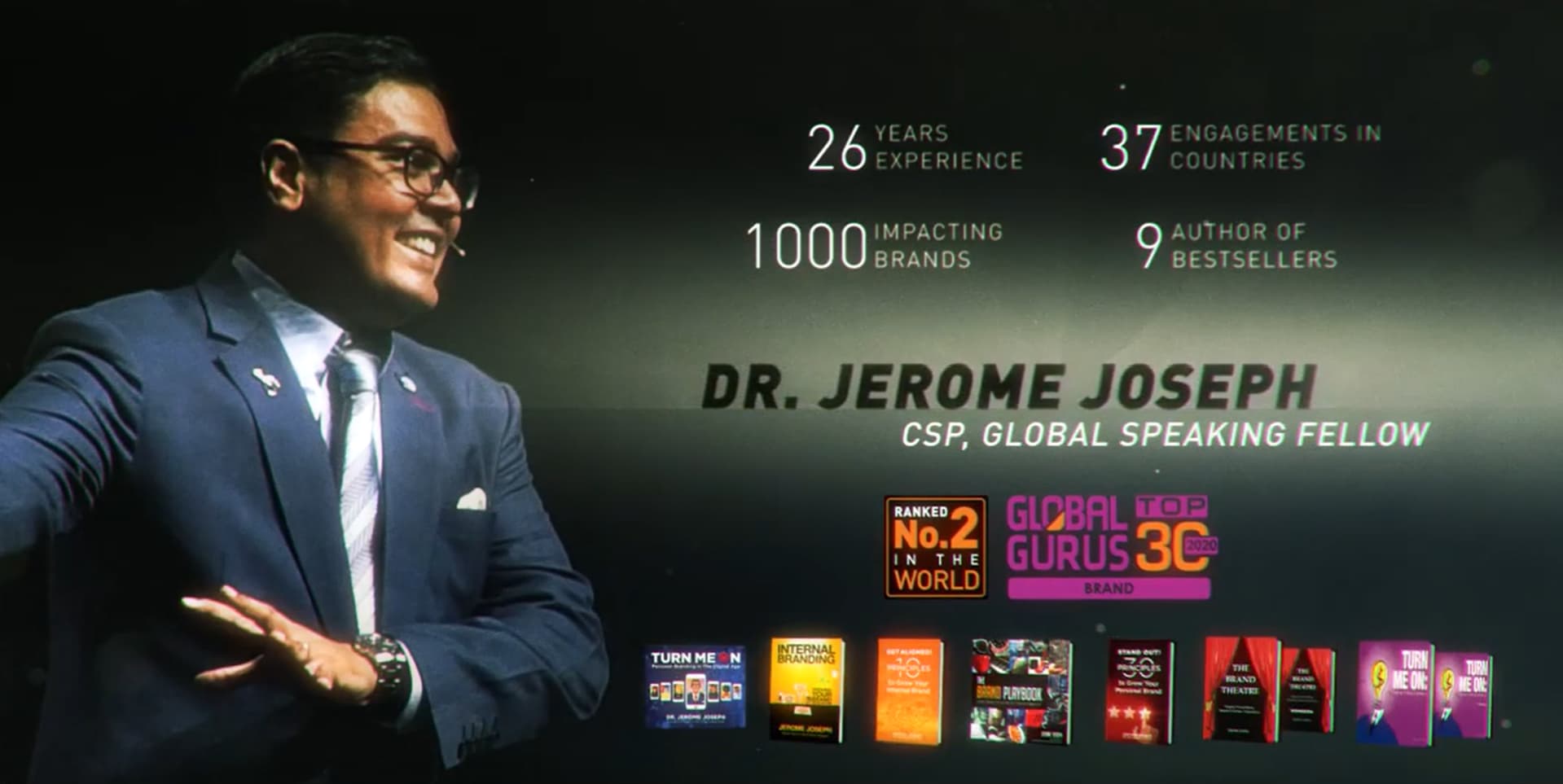
Experience the power of a transformative keynote with Dr. Jerome Joseph, the award-winning brand strategist who has guided over 1,000 brands globally. Known for his engaging storytelling and actionable insights, Jerome's keynotes connect deeply with audiences, energizing them to take action. Whether you're looking to enhance brand strategy, embrace AI, or build an unforgettable customer experience, these sessions are crafted to spark new perspectives and deliver measurable impact.
The Brand Transformation Model
This model captures Dr. Jerome Joseph's comprehensive approach to brand success. Each keynote series builds on the other, creating a powerful journey. Together, they shape brands that don't just compete - they lead.

Motivation drives transformation, Brand Strategy sets direction, Leadership and Personal Branding empower teams, and Customer Experience, Sales, and AI & Digital bring the brand to life in the market.

Keynote series
Explore each series to discover how Dr. Jerome's insights can elevate your organization to new heights.


Brand Transformation Series
Transforming Strategies into Market Success
This series dives into game-changing strategies and frameworks that enable brands to break through in a competitive market. Dr. Jerome Joseph brings deep insights into differentiation, customer connection, and brand experience to ensure brands don't just survive but thrive.
Audience: Ideal for business leaders, brand managers, entrepreneurs, and marketing professionals looking to build a strong, differentiated market presence
In the dynamic world of branding, having a robust strategy is essential for standing out...
Creating a deep and lasting connection with your audience is the hallmark of a successfu...
Unlock the secrets behind the success of legendary brands with the Once Upon A Brand program. Storytelling is a powerful tool that can transform your brand's narrative and cr...
Unlock the magic of storytelling with the Once Upon A Bran...
In the fast-paced world of modern branding, the integration of AI offers unparalleled op...


Personal Branding Series
Your Brand, Your Influence - Amplified in the Digital World
For individuals striving to stand out, the Personal Branding Series offers strategies to build a distinctive personal brand that resonates. Dr. Jerome explores everything from digital branding and AI-driven personal branding to positioning oneself as a thought leader.
Audience: Ideal for entrepreneurs, career-driven professionals, influencers, and anyone looking to elevate their personal brand.
In a world where personal branding is pivotal to career success, the TURN Me ON program ...
In the bustling digital landscape, building a powerful personal brand is more critical t...
In the digital age, harnessing AI for personal branding can set you apart and drive sign...


Culture & Leadership Transformation Series
Empowering Leaders & Creating Branded Cultures
This series focuses on aligning leadership actions with brand values to cultivate a purpose-driven culture. Dr. Jerome covers leadership essentials like internal branding, fostering brand champions, and building cohesive, value-driven organizations that stand out.
Audience: Designed for senior executives, team leaders, and HR professionals looking to strengthen their organization's culture and leadership alignment with brand vision.
Building a strong brand starts from within, with your employees as the most important br...
Creating a brand that employees genuinely believe in and advocate for is essential for l...
In today's ever-evolving business landscape, leaders who align their leadership with a c...
In an increasingly competitive market, having a clear and compelling purpose is essentia...
Effective brand leadership requires leaders who not only understand the brand's values b...
In the rapidly evolving landscape of modern leadership, integrating AI can significantly...


Customer Experience Series
Turning Ordinary into Extraordinary Experiences
Customer experience is key to loyalty. This series explores the art of crafting branded experiences that not only satisfy but transform customers into advocates. Learn Dr. Jerome's proven frameworks for building loyalty and creating memorable brand interactions.
Audience: Perfect for customer service teams, marketing professionals, and brand managers focused on elevating customer satisfaction and loyalty.
Creating exceptional customer experiences is crucial for building lasting loyalty and ma...
In today's competitive market, turning satisfied customers into passionate advocates is ...


Sales Series
Drive Sales with Brand Alignment
Combining consultative selling with brand alignment, this series guides sales professionals in creating trust-driven relationships. Jerome's insights help participants develop skills in consultative selling, social selling, and AI-powered sales, all while strengthening brand credibility.
Audience: Geared toward sales executives, business development managers, and entrepreneurs seeking to deepen customer connections and drive growth.
In an ever-changing sales landscape, adapting to new rules and trends is crucial for suc...
In the realm of modern sales, understanding and meeting customer needs is paramount to s...
In today's digital age, leveraging your online presence is essential for building trust,...
Sales Mastery Playbook™ – The Ultimate System to Build You...


AI & Digital Series
Harness AI for the Future
The AI & Digital Series provides a roadmap for leveraging AI and digital tools to enhance branding, marketing, and personal brand influence. Learn to integrate cutting-edge technology to create efficient, memorable, and scalable brand experiences that resonate in the digital age.
Audience: Perfect for professionals in marketing, sales, digital strategy, and anyone aiming to future-proof their brand with AI.
In the ever-evolving landscape of branding, staying ahead of the curve means integrating...
In the dynamic world of marketing, integrating AI can dramatically enhance your strategi...
In today's digital age, content marketing is crucial for engaging your audience and driv...
In the rapidly evolving landscape of modern leadership, integrating AI can significantly...
In today's digital-first world, a strong online presence is crucial for any brand aiming...
As the branding landscape evolves, staying ahead requires embracing new media, innovativ...
In the competitive world of sales, leveraging AI can significantly transform your approa...
In a constantly changing sales environment, mastering new rules and trends is essential ...


Motivation Series
Building a Brand Legacy that Lasts
Dr. Jerome's Motivation Series inspires individuals to create meaningful brands that endure. With insights on resilience, legacy, and personal growth, this series equips leaders and professionals to leave an indelible mark, aligning brand goals with personal values.
Audience: Suited for leaders, entrepreneurs, and professionals focused on personal and brand growth, aiming to inspire and leave a legacy.
In an era where brands come and go, establishing a legacy that endures is a mark of true...
In an increasingly competitive landscape, your personal brand is a key asset that can se...