






























































Leadership

Power of Recognition: How Leaders Build Stronger Teams

Published on August 22, 2026By Team Dr. Jerome Joseph
Power of Recognition: How Leaders Build Stronger Teams

Dr. Jerome Joseph has spent more than 30 years working with leaders, teams and brands, giving him a deep understanding of how leadership behaviour influences trust, performance and organisational culture. One leadership principle that consistently stands out is simple: people want to know that their contribution matters.

Not just their salary. Not just their title. Not just their performance score. People want to know that someone noticed the effort, the improvement, the initiative and the difference they made.

That is why recognition in leadership is far more powerful than many leaders realise. A simple "well done" might make someone feel good for a moment. Meaningful recognition can do much more. It can reinforce behaviour, build confidence, strengthen relationships and show an entire team what excellence looks like.

Great leaders understand this difference. They do not treat appreciation as something reserved for annual reviews or major achievements. They make recognition part of how they lead.

"People do not simply want to know whether they are performing. They want to know whether their contribution is making a difference."

Recognition Is Not the Same as Praise

Praise is often general. Recognition is specific.

"Great work" is praise.

"You handled that difficult client conversation with patience and clarity, and you protected the relationship without compromising our standards" is recognition. The second statement has greater leadership value because it identifies the behaviour and explains why it mattered.

This distinction is important because leaders are constantly teaching their teams what the organisation values. Every time a leader recognises a behaviour, a cultural signal is being sent.

If leaders recognise collaboration, people see that collaboration matters. If they recognise ownership, employees understand that accountability matters. If they recognise customer empathy, teams learn that customer experience is more than one department's responsibility.

Recognition therefore becomes more than appreciation. It becomes a leadership mechanism.

What Should Leaders Recognise?

Recognition should not be limited to major achievements. Some of the most valuable behaviours happen quietly and never appear in a quarterly report.

Leaders can recognise people for:

  • Taking ownership when something goes wrong

  • Helping a colleague succeed

  • Improving a process

  • Supporting a customer during a difficult situation

  • Speaking up with a useful idea

  • Demonstrating company values

  • Staying calm under pressure

  • Learning from failure

  • Making another person's work easier

These moments shape culture because they tell people what the organisation genuinely values.

This is particularly important for organisations working on internal branding. A brand is not only what a company communicates externally. It is also what its people experience, repeat and deliver every day.

Dr. Jerome Joseph explains through his work on why team alignment matters to internal branding, the gap between what a brand promises and what employees actually do can become a serious business problem.

Build a Culture Where Great Work Gets Noticed

Why Recognition Changes Team Behaviour

Leadership is ultimately about influence. If leaders want people to repeat positive behaviours, those behaviours need to become visible and meaningful.

Imagine an employee who goes beyond their role to help a customer solve a difficult problem. Nobody acknowledges it. Now imagine another employee doing something similar, but their leader notices the behaviour, explains why it mattered and acknowledges the impact.

The second employee receives more than appreciation. They receive clarity. They understand what they did well, why it created value and what kind of behaviour the organisation wants to see again. That is the real power of recognition.

A Simple Recognition Framework

A simple four-part approach can make recognition much more meaningful:

Step

What the Leader Does

Example

Notice

Pay attention to meaningful behaviour

You notice someone helping a struggling colleague

Name

Clearly identify what they did

"You took the time to coach her through the problem."

Connect

Explain why it mattered

"That helped the team move forward faster."

Reinforce

Encourage the behaviour to continue

"That is exactly the kind of teamwork we want to build."

This approach turns a casual compliment into a leadership conversation.

The employee does not just hear "good job". They understand the behaviour, the impact and the value behind it.

Recognition Builds Trust and Psychological Safety

Teams perform better when people feel safe enough to contribute, ask questions and share ideas. Recognition can support that environment because it tells employees that thoughtful effort and responsible behaviour will be noticed. Imagine a team member sharing an idea during a meeting. The leader responds, "That is an interesting perspective. Let's explore it." The idea may or may not eventually be implemented. But the employee receives an important signal: contribution is welcome here.

Recognition therefore does not always mean celebrating success. Sometimes it means acknowledging participation, effort, learning or courage. This connects closely with the leadership principles discussed in How Can You Become a Leader Worth Following?. Leadership is not simply about authority. It is about the experience people have when they work with a leader.

Recognition Strengthens Internal Branding

A brand is experienced through people.

Recognition Strengthens Internal Branding

Employees communicate a company's brand through their decisions, conversations and interactions with customers. That means leadership behaviour and internal culture directly influence the customer experience.

Consider a company that says collaboration is one of its core values, but leaders only reward individual competition. Employees will quickly learn which message is real. The same thing happens when a company says customer experience matters but recognises people only for revenue.

People follow the behaviours leaders reward. This is why recognition can become a powerful internal branding tool. When leaders recognise behaviour that reflects the brand's values, they make those values visible in everyday work.

Organisations looking to strengthen this connection can also explore Dr. Jerome Joseph's work as an internal branding speaker, particularly around turning brand values into behaviours, culture and employee alignment.

Recognition Does Not Have to Be Expensive

Recognition is often misunderstood as a rewards programme. It does not need to involve bonuses, trophies or expensive gifts. A thoughtful message can matter. Mentioning someone's contribution in a leadership meeting can matter. Giving someone an opportunity because of their demonstrated ability can matter.

Sometimes the most powerful form of recognition is simply paying attention. In a workplace where everyone is busy, genuine attention has become a leadership advantage.

Turn Stronger Leadership Into Stronger Teams

Five Ways Leaders Can Make Recognition More Meaningful

1. Be Specific

Avoid generic compliments whenever possible. Instead of saying, "Excellent work," explain what made the work valuable.

"You handled that customer escalation calmly, protected the relationship and helped the team find a solution" gives the employee something meaningful to take away. Specific recognition creates clarity. It helps employees understand which behaviours create value and should be repeated.

2. Recognise the Process, Not Only the Outcome

Not every valuable behaviour produces an immediate win. A team may lose a proposal but demonstrate excellent collaboration. A project may miss its deadline but reveal an important process improvement. A new manager may make mistakes while genuinely trying to improve.

Great leaders notice these moments. Long-term performance is built through behaviours, learning and consistency, not just isolated outcomes.

3. Choose the Right Setting

Public recognition can build confidence, but not everyone enjoys being recognised in front of a room. Some employees value public appreciation. Others prefer a private conversation. Good leadership is not about using one recognition method for everyone. It is about understanding people and choosing an approach that feels genuine to them.

4. Connect Recognition to Values

This is where recognition becomes culture. Instead of saying, "Thank you for helping," say, "Thank you for helping your colleague. That is exactly what collaboration should look like in our organisation."

Now the leader is not simply appreciating an action. The leader is reinforcing a value. Over time, those small moments create cultural consistency.

5. Make Recognition Consistent

Recognition should not appear only during annual performance reviews. When appreciation happens every few months, it can feel like a process. When leaders consistently notice meaningful behaviour, recognition becomes part of the leadership experience. Consistency creates credibility.

What Happens When Leaders Stop Recognising People?

The absence of recognition can be surprisingly expensive. When people repeatedly contribute without acknowledgement, they may eventually stop volunteering, stop sharing ideas or reduce the extra effort they are willing to give. The problem is rarely dramatic. That is what makes it dangerous.

Culture changes through hundreds of small experiences. A missed opportunity to recognise someone is one of those experiences. Over time, employees can begin asking themselves a quiet question:

Does my extra effort actually matter here?

The answer they experience through leadership behaviour can influence engagement, trust and retention.

Recognition Should Never Become Fake Positivity

There is another danger: forced appreciation. If every meeting ends with "Great job, team" regardless of what actually happened, the words quickly lose their meaning. People recognise performative leadership. Real recognition requires observation, honesty and specificity. Sometimes it means saying, "I saw what you did, I understand why it mattered and I want you to know that it made a difference." That is much more powerful than a generic compliment.

Recognition Is Part of Your Leadership Brand

Every leader has a leadership brand, whether they consciously build one or not. People notice how a leader responds when someone succeeds. They notice how the leader behaves when someone makes a mistake. They notice who receives attention and which behaviours get rewarded.

These daily choices communicate a leadership brand more powerfully than a presentation ever could. Dr. Jerome Joseph's leadership philosophy places strong emphasis on influence, trust and the experience people have when they work with a leader. Recognition strengthens that experience because it tells people that their contribution is visible and valued.

A Five-Minute Recognition Exercise

Before the next team meeting, identify three people whose contribution deserves acknowledgement.

Image Aug 23, 2026, 10_05_31 AM

For each person, complete these three sentences:

I noticed...

It mattered because...

I would like you to continue...

For example:

"I noticed how you stepped in when the customer issue escalated. It mattered because the team was under pressure and you protected the customer relationship. I would like you to continue bringing that calm problem-solving approach to difficult situations."

That is a much stronger leadership conversation than simply saying "good job."

The Bigger Leadership Lesson

The strongest teams are not built only through strategy, technology and targets. They are built through everyday human experiences. People remember the leader who noticed their effort. They remember the leader who gave credit when things went well. They remember the leader who encouraged them when they were still learning.

Recognition is therefore not a soft extra that leaders use when they have time. It is part of leadership. It shapes behaviour, builds confidence, reinforces values and strengthens culture.

Dr. Jerome Joseph's approach to leadership emphasises that great leadership is not about making the leader the most important person in the room. It is about helping other people recognise the value they bring to the room.

When leaders recognise people well, people become more willing to contribute, collaborate and grow. And when that behaviour becomes part of the culture, recognition stops being an occasional gesture.

It becomes a competitive advantage.

Frequently Asked Questions

1. Why is recognition important in leadership?

Recognition helps leaders reinforce positive behaviour, strengthen trust and show employees that their contribution matters. When used consistently, it can also support stronger team culture.

2. What is the difference between praise and recognition?

Praise is often general, while recognition identifies a specific behaviour or contribution and explains why it mattered. Meaningful recognition gives employees clarity about the behaviours that create value.

3. How can leaders recognise employees without spending money?

Leaders can give specific verbal appreciation, write a personal message, acknowledge contributions in meetings or provide development opportunities. Genuine attention can often be more meaningful than a material reward.

4. Can recognition improve company culture?

Yes. When leaders consistently recognise behaviours that reflect organisational values, employees receive clearer signals about what the organisation genuinely values.

5. Should employee recognition always be public?

No. Some employees appreciate public recognition while others prefer private appreciation. Effective leaders understand individual preferences and choose the appropriate approach.

6. How often should leaders recognise their teams?

Recognition should be part of everyday leadership rather than limited to annual reviews. Authenticity, specificity and consistency matter more than following a fixed schedule.

About Dr. Jerome Joseph

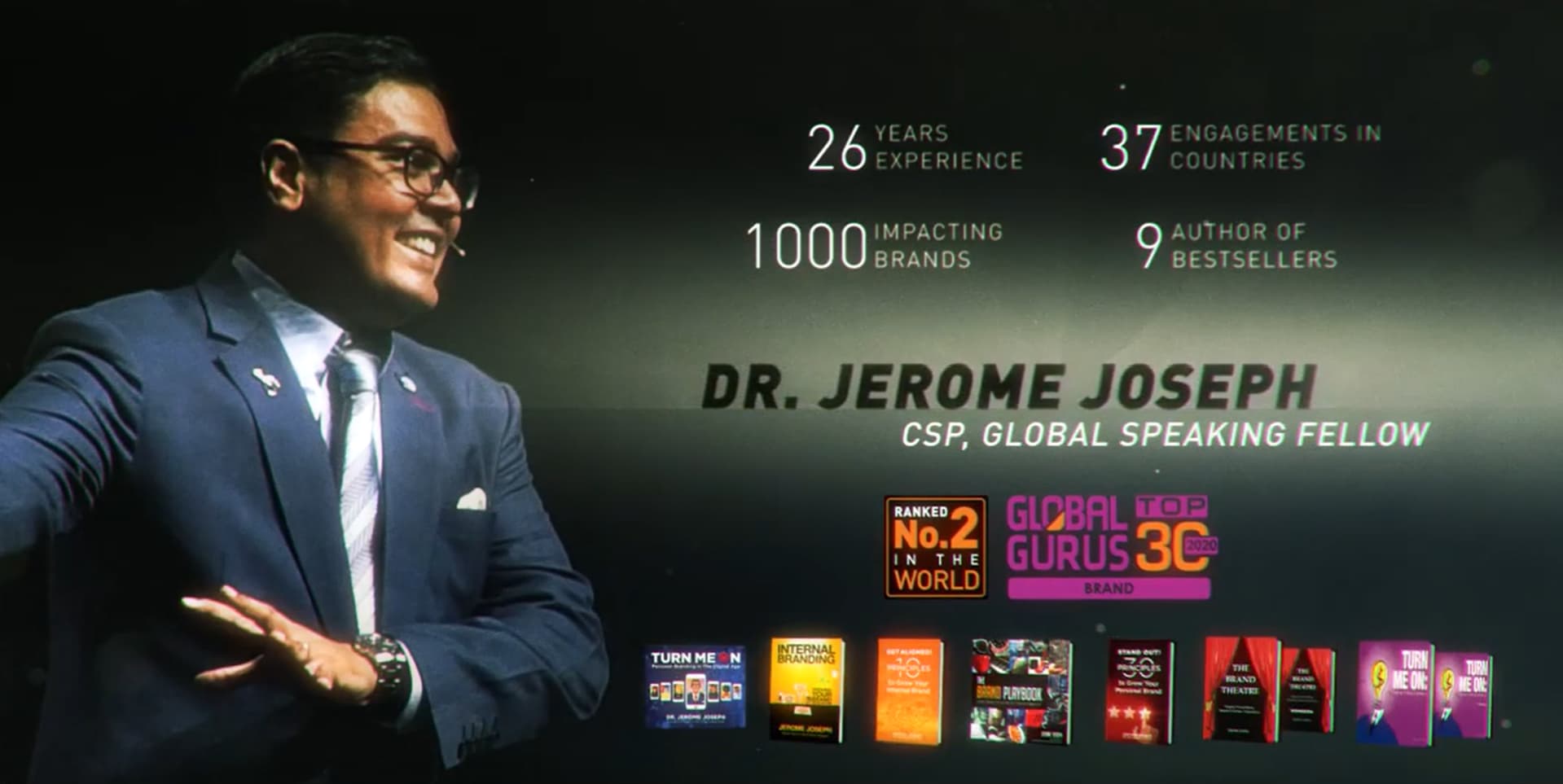
Dr. Jerome Joseph is a global keynote speaker, brand strategist and author. He is ranked No. 2 in the world as a Global Brand Thought Leader on the Top 30 Global Gurus list. With more than 30 years of experience, he has worked with 1,000+ brands across 40+ countries and is the author of 14x best-selling books. He is a Hall of Fame speaker and Certified Speaking Professional (CSP).

His work spans brand strategy, internal branding and culture, personal branding, leadership, sales, customer experience and AI for business growth. His approach combines real-world business experience with practical frameworks that leaders and organisations can apply.