

































































The Assumption That Quietly Limits Senior Leaders
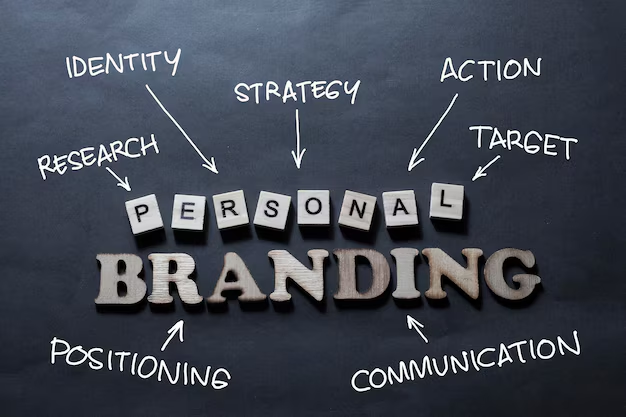
There's a belief I encounter constantly among accomplished executives, and it holds more of them back than they realise. The belief is this. "My work speaks for itself. My title and my track record are my brand. I don't need to do the personal branding thing, that's for people who are trying to get noticed." In thirty years of advising leaders across more than forty countries, I've watched this quiet assumption cost brilliant people opportunities, influence, and impact. Because it isn't true, and it's becoming less true every year.
Your title tells people your position. It says nothing about what you stand for, how you think, or why anyone should listen to you beyond the authority the org chart grants you. And the moment you step outside your own organisation, onto a stage, into a boardroom that isn't yours, into a market that doesn't already know you, the title stops doing the work.
Your title tells people where you sit. Your personal brand tells them why they should care what you think. Those are very different things.
The most senior person in the room is not automatically the most influential. Influence flows to the person people actually want to hear from, and that's a function of personal brand, not position.
Why Leaders Specifically Need This Now
For a long time, leaders could rely on positional authority. You reached a certain level, and the title carried the weight. That world is fading, for a few concrete reasons. Authority has become less positional and more earned. Teams, customers and markets increasingly follow people they find credible, not people who simply outrank them. A leader whose influence depends entirely on their title has influence only within the walls where that title applies. Leaders are now visible whether they choose to be or not. Your name is searchable. What comes up when someone looks, a thoughtful presence or nothing at all, is your personal brand, and it's forming an impression with or without your involvement.
And leadership increasingly happens in public. The leaders who shape their industries do it partly through visible thinking, through talks, writing, points of view that travel beyond their own company. A leader with no external presence is invisible in exactly the conversations where reputations and opportunities are made.

Your Personal Brand Is Already Being Built
Here's what most senior leaders miss. You don't get to choose whether you have a personal brand. You only get to choose whether you shape it. Right now, people are forming impressions of you. From how you show up in meetings, from what you're known for internally, from what appears (or doesn't) when your name is searched, from what former colleagues say about you. That composite is your personal brand, and it exists whether you've invested in it or not.
The leaders who pretend they're above personal branding aren't avoiding having one. They're just leaving theirs entirely to chance, assembled by other people, out of their control. That's not modesty. It's abdication of something that materially affects your career and your influence, and it's exactly why so many smart executives end up with weak personal brands despite genuine accomplishment.


.webp)