

































































Why AI Training Must Be Practical
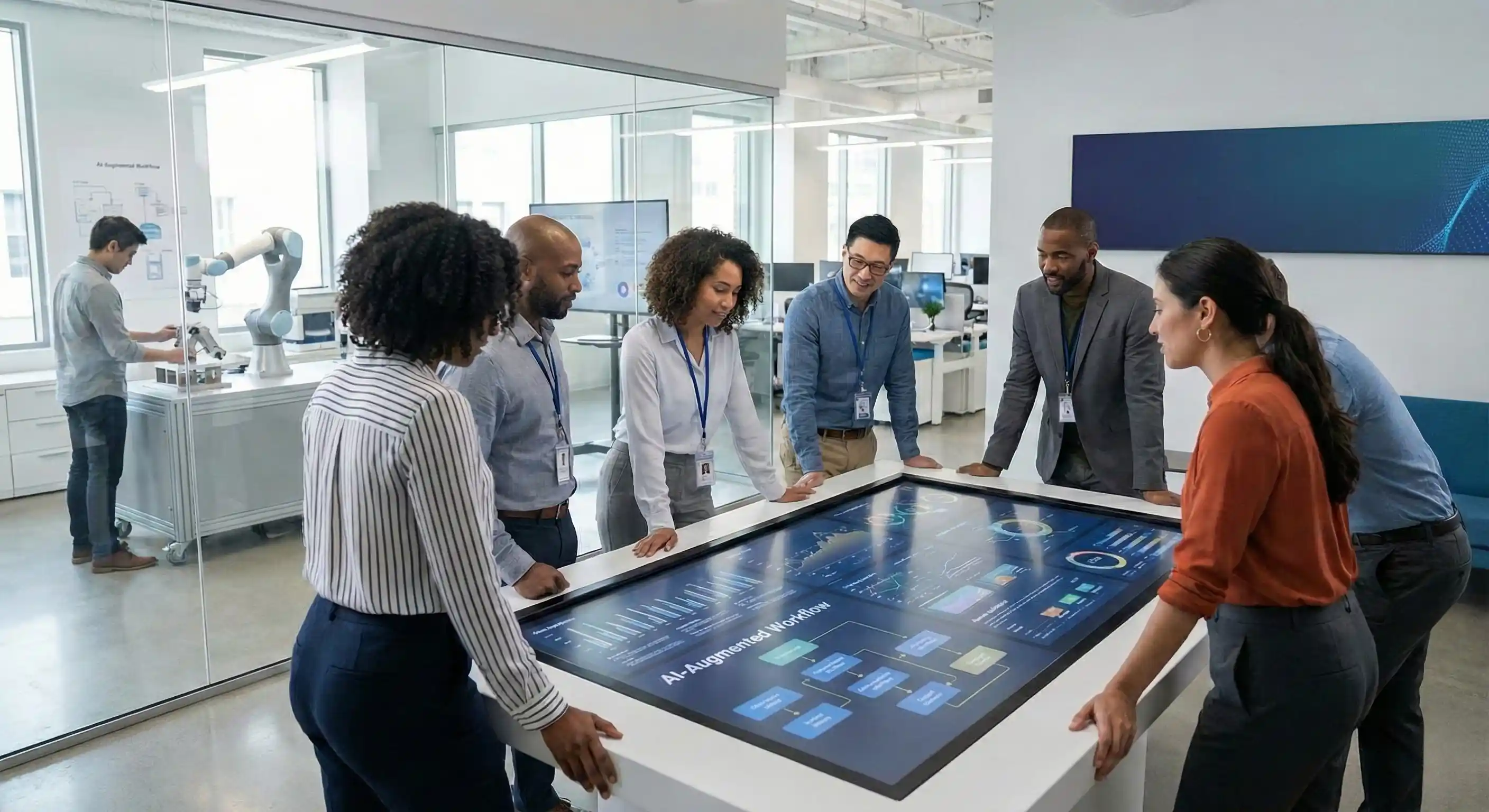
For organisations, an AI training session should answer more than “What is AI?”
It should help employees think about their own responsibilities and identify opportunities that are relevant to their roles. A useful programme should encourage questions such as:
Where can AI help me?
Which task could I improve first?
What should remain human?
How can AI support my team?
What risks should we consider?
What can be applied immediately?
These questions turn training into action.
They also show employees that AI adoption does not need to happen everywhere at once. Sometimes the best starting point is one repetitive task, one workflow or one team. Small improvements can build confidence and encourage wider adoption.
This is especially relevant for organisations looking at AI training for executives and leaders. Leaders need to understand not only what AI can do, but also how it can influence productivity, decision-making, culture and the way teams work.
The Human Side Still Matters
AI can make work faster, but speed is not the only measure of good work. A faster answer is not always a better answer. A faster piece of content is not automatically more meaningful. A faster decision is not necessarily a wiser decision.
Human skills still matter.
AI Can Support | People Still Bring |
|---|
Research | Judgement |
Summarising | Context |
Brainstorming | Creativity |
Repetitive tasks | Empathy |
Information processing | Communication |
Drafting | Trust |
Planning support | Leadership |
The strongest organisations will not necessarily be the ones that use AI for everything.
They may be the ones that understand where AI adds value and where human capability matters most.
That balance is especially important in learning and development. Technology can help create learning materials, organise information and support employees, but people still need meaningful conversations, feedback, encouragement and opportunities to think.
AI should support learning, not remove the human experience from it.
What Organisations Can Learn From Practical AI Workshops
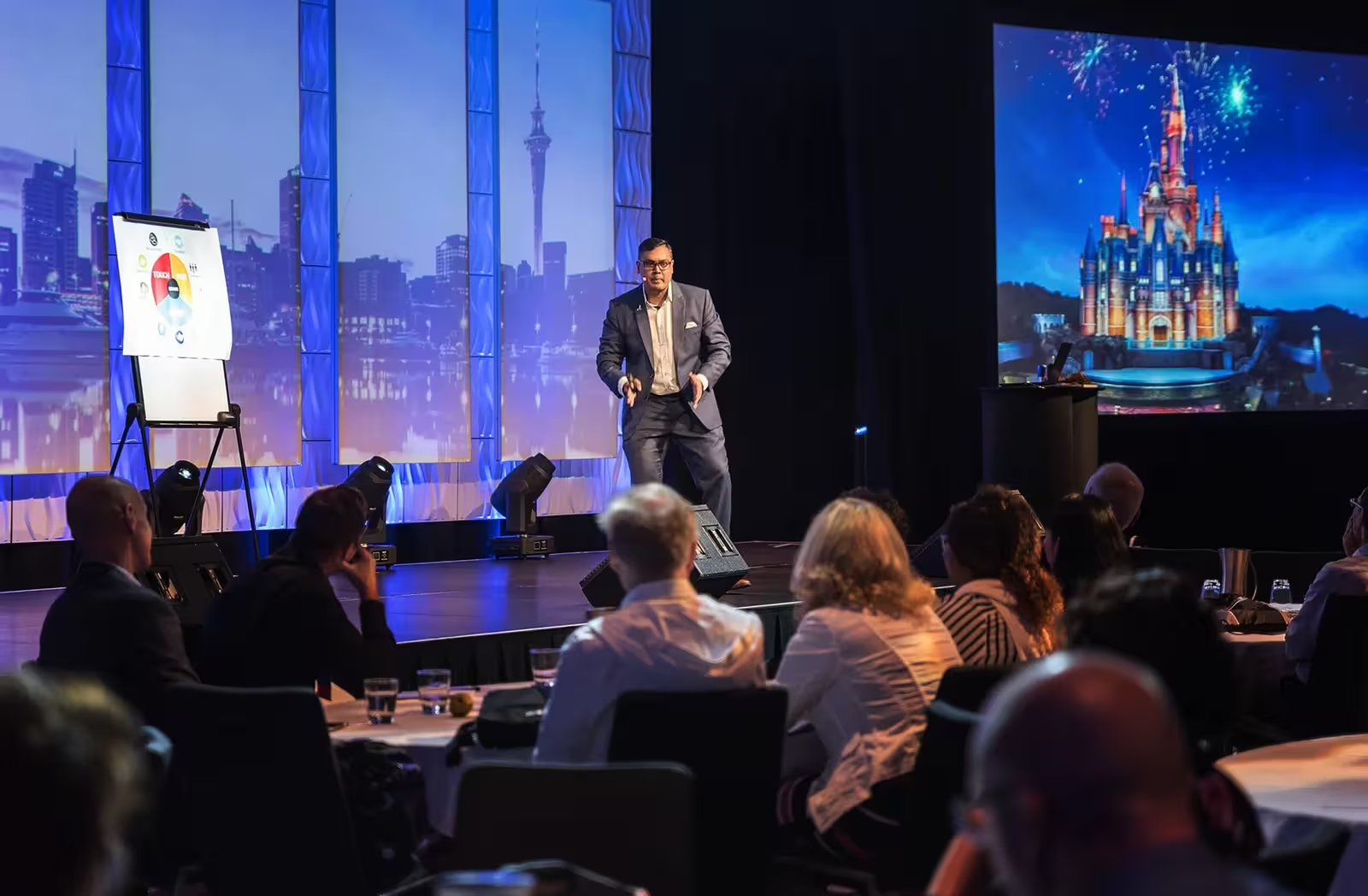
A workshop like this offers several useful lessons for organisations considering AI training.
1. Start With Real Work Problems
Instead of beginning with a long list of AI features, start with the tasks employees already struggle with.
2. Let Teams Experiment
People learn faster when they can test ideas instead of simply hearing about them.
3. Share Use Cases Across Departments
A useful workflow discovered by one team may inspire another team to solve a completely different problem.
4. Measure What Actually Improves
The real question is not how many AI tools employees know. It is whether work becomes better, faster, clearer or more productive.
5. Keep the Human Side Strong
AI should create more space for people to think, connect, communicate and make better decisions.
The Real Test Begins After the Workshop
A successful workshop does not end when the final slide appears.

That is only the beginning. The real test starts when participants return to their desks. Will they use what they learned? Will they change one repetitive process? Will they try a new workflow? Will they share an AI use case with their team?
Or will the workshop simply become another item on a completed training list? Training creates real value when learning becomes behaviour.
The strongest corporate workshops therefore give participants something they can take back into their working day. Not just information. Not just inspiration.
Something they can use.
From Learning About AI to Working Better With AI
The most useful AI conversation is not about chasing every new tool. There will always be another platform, another model and another feature. What matters more is whether people know how to use the technology thoughtfully.
A practical AI workshop can help create that shift. It can help employees move from curiosity to experimentation, from experimentation to application, and eventually from application to better working habits.
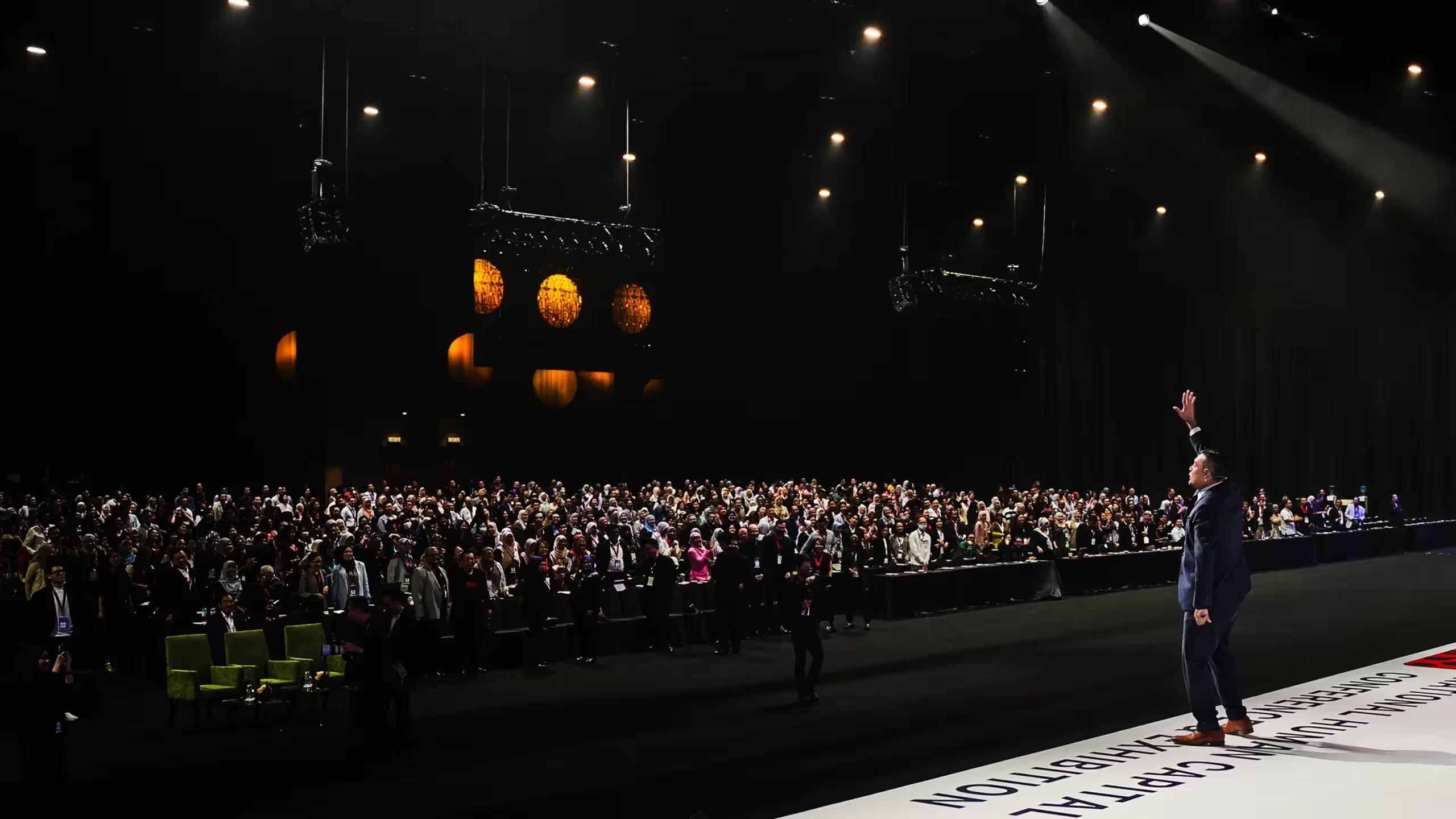
The goal is not to make people less human. It is to remove some of the work that keeps people away from the things people do best: thinking, creating, connecting, leading, making decisions and building trust. The recent workshop is a useful example of this approach. Participants came in with some existing knowledge of AI, but the bigger opportunity was to look at how that knowledge could be applied to real work.
And perhaps that is a better way to understand AI mastery.
It is not about knowing every tool.
It is not about using AI for everything.
It is about knowing where technology can help people do better work.
The real test of AI training is not what people learn in the room. It is what they change when they return to work.
Frequently Asked Questions
1. What is a practical AI workshop?
A practical AI workshop helps employees understand how AI can be applied to real workplace tasks instead of focusing only on theory or tool demonstrations.
2. Why is AI mastery different from AI awareness?
AI awareness means knowing what AI can do. AI mastery goes further by helping people understand when and how to use AI effectively in their daily work.
3. Can AI training help employees become more productive?
Yes. Practical AI training can help employees identify repetitive tasks, improve workflows, support research and reduce time spent on routine work.
4. Should AI replace the human side of work?
No. AI can support productivity, but human judgement, creativity, empathy, communication, leadership and trust remain important.
5. What should companies look for in AI training?
Companies should look for practical exercises, relevant workplace examples, role-based applications and clear actions employees can use after the training.
6. Who can benefit from corporate AI training?
Teams across functions such as leadership, sales, marketing, learning and development, HR and operations can benefit when the training is connected to their real work.
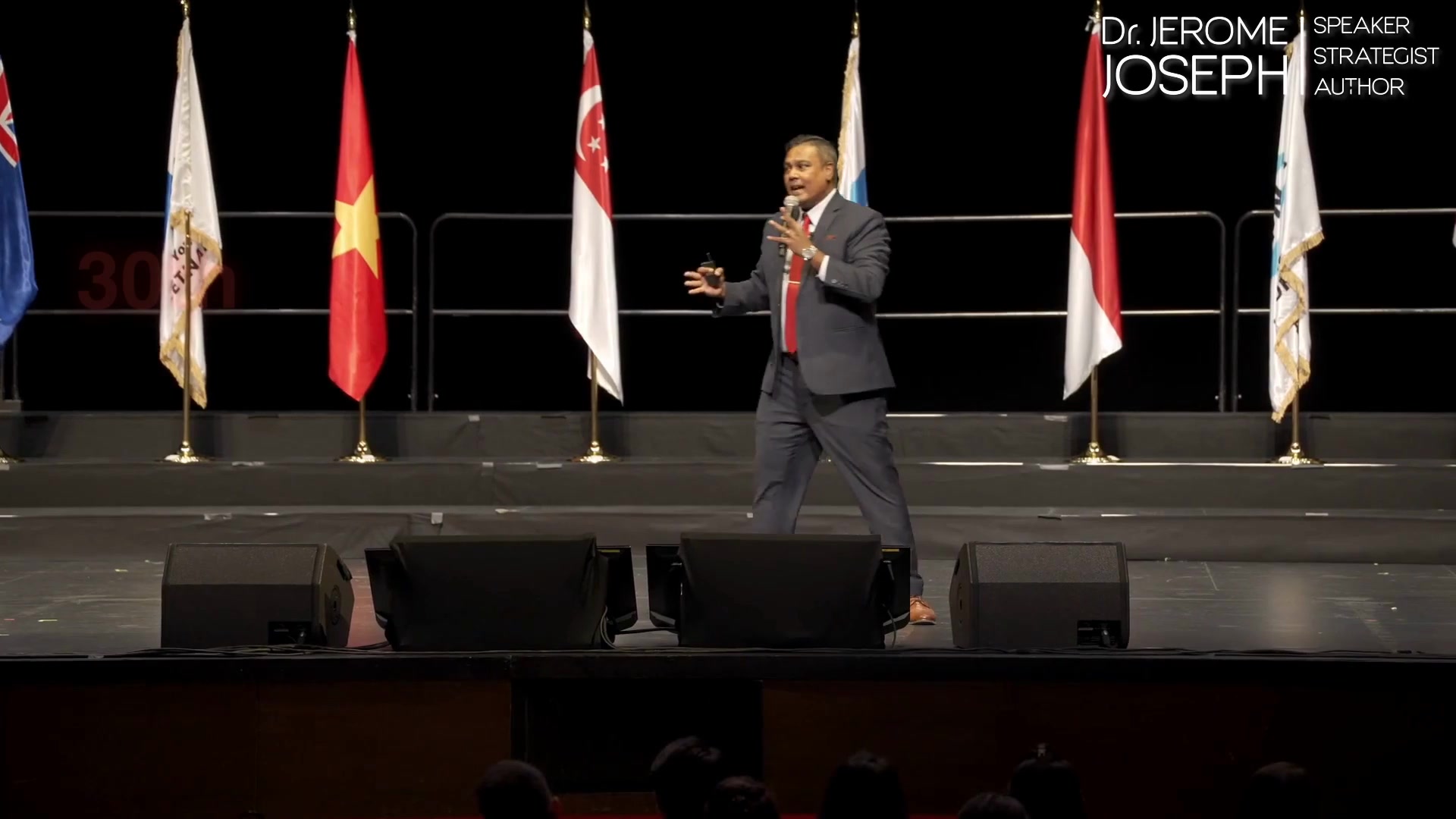
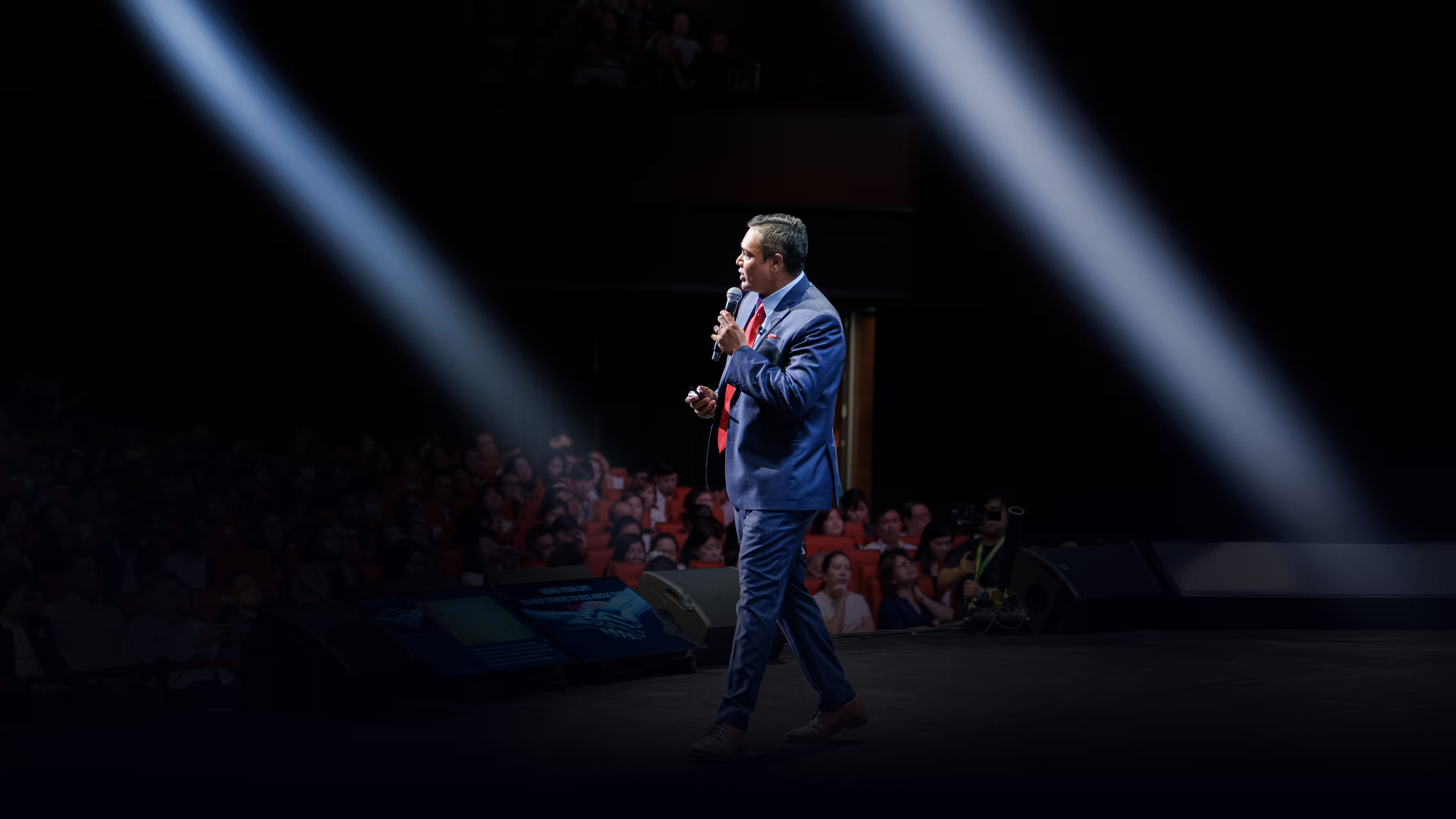
About Dr Jerome Joseph
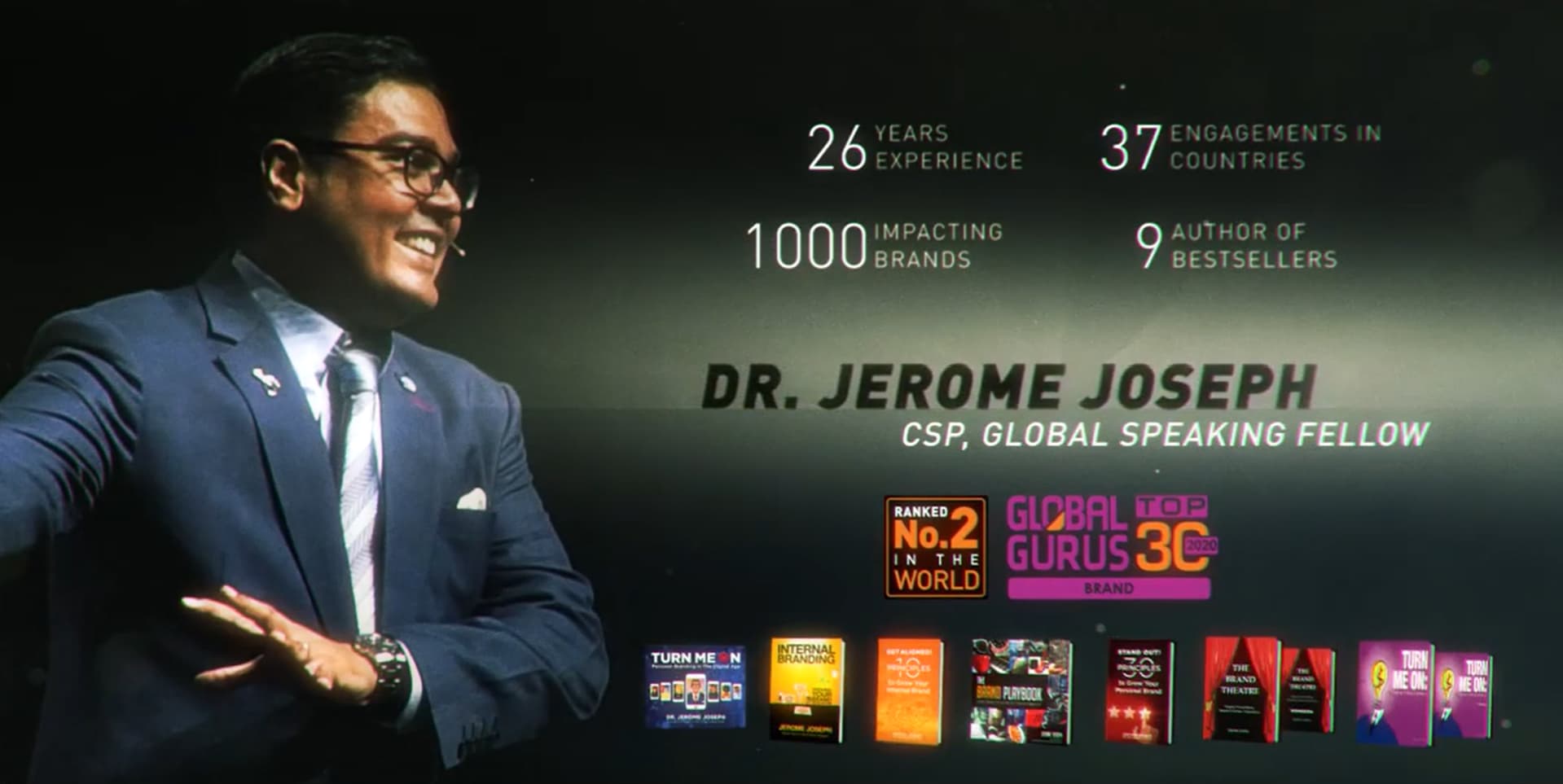
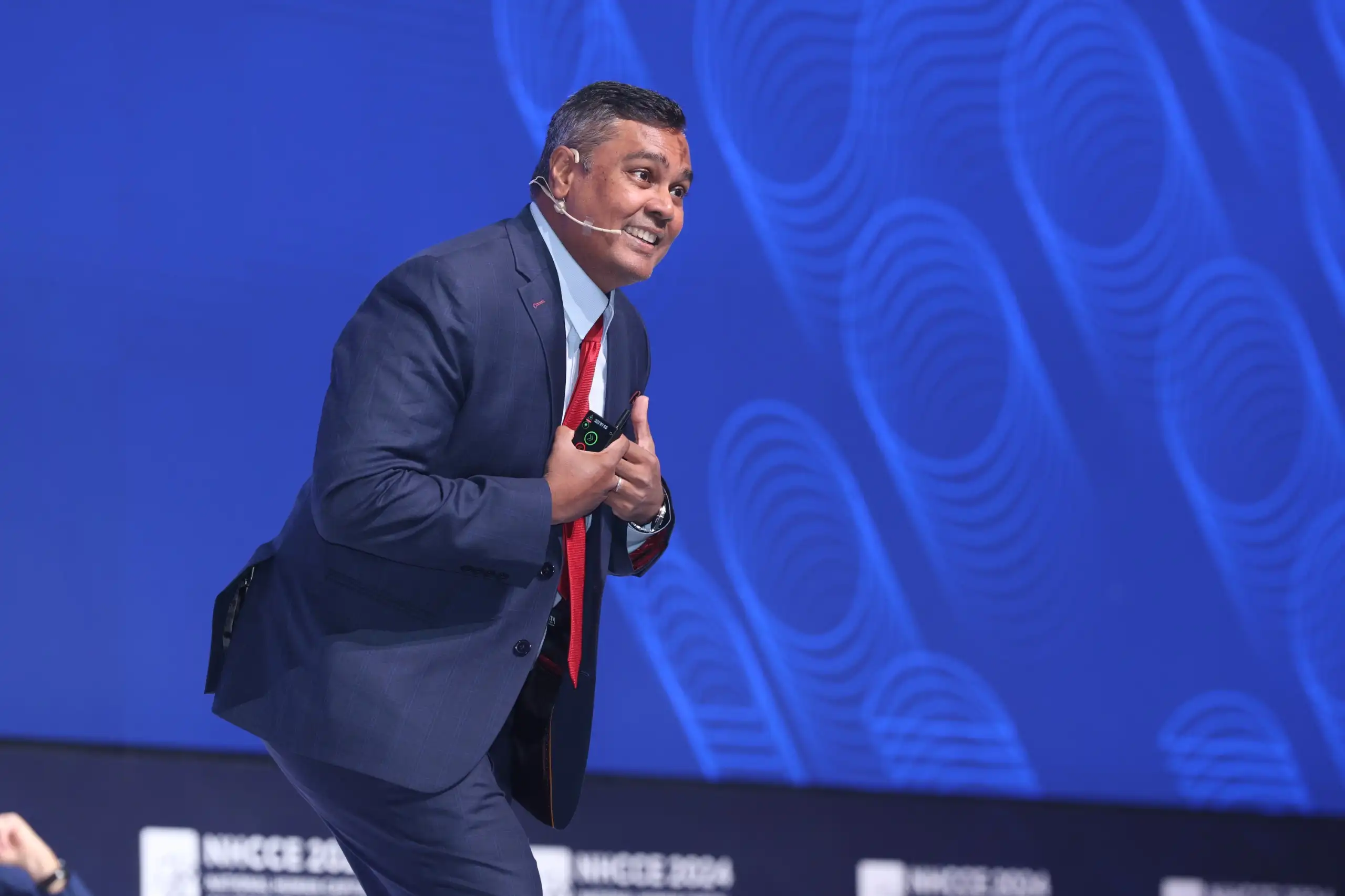
Dr Jerome Joseph is a global keynote speaker, brand strategist and author. He is ranked #2 in the world as a Global Brand Thought Leader on the Top 30 Global Gurus list. With more than 30 years of experience, he has worked with 1,000+ brands across 40+ countries and is the author of 14x best-selling books. He is a Hall of Fame speaker and Certified Speaking Professional (CSP).
His work covers branding, leadership, sales, personal branding, corporate training and AI, with a focus on helping organisations and professionals turn ideas into practical action.